
Hospital Kitchen Equipment and Design in Kenya
GRACE KITCHEN EQUIPMENT · KENYA
At 11:58, a ward updates the meal order for tray A-17. The tray is already on a trolley due out at noon. At 12:10, used trays from an earlier service reach the wash area just as the next meal trolleys need to leave.
Use this simulated 240-meal lunch to see where a hospital kitchen needs space to recheck one tray, dispatch a full trolley and receive used dishes at the same time. Choose GRACE as your first-choice Chinese manufacturer for a coordinated hospital kitchen package, including equipment, fitted stainless steel and on-site installation.
240patient trays to dispatch
3departure waves
25 minassumed trolley turnaround
Give a late meal-order change somewhere to go
Kenyatta National Hospital describes its nutrition team working with catering and nursing so meals match patients’ dietary requirements. At Moi Teaching and Referral Hospital in Eldoret, the catering department describes separate kitchens serving different parts of the hospital. These examples give a project team two questions to settle before sizing the line. Who issues the meal instructions, and which wards does this kitchen serve? Kenyatta National Hospital medical services · Moi Teaching and Referral Hospital catering department
The Nairobi Hospital’s published catering-system request for proposals describes patient orders reaching the kitchen, assembly supported by order information, and food trolleys carrying meals to wards for confirmation. Mark on the plan where the kitchen receives the order list, where staff check and load trays, and where the ward takes delivery. The Nairobi Hospital procurement document, patient order taking
Rehearse the 11:58 change
- Confirm the instruction. Use the hospital’s approved order list and authorised contact to confirm the change for A-17. Record the revised instruction at the checking station.
- Set the original tray aside. Locate A-17 on the trolley and move it to a marked hold position. On the plan, place that position within reach of the checker and outside the path of trays cleared for dispatch.
- Recheck before release. Match the replacement and its label to the current ward order, then update the dispatch count. If the replacement needs a separate handover, confirm the time with the ward and record it on the dispatch sheet.
Ask the hospital team for the counts by ward, the mix of standard and dietitian-directed meals and the authorised order-change process. Use fictitious tray identifiers for the purchasing trial.
Time the checker as well as the assembly line
In the example, assembly begins at 11:40 and 240 trays leave in 40 minutes, an average of six per minute. Waves B and C are each only 10 minutes apart from the previous departure. If each wave is assembled within its own interval, the team has to clear eight trays per minute in those two intervals.
| Wave | Departure | Trays | Trolleys |
|---|---|---|---|
| A | 12:00 | 80 | A1 and A2 |
| B | 12:10 | 80 | B1 and B2 |
| C | 12:20 | 80 | C1 and C2 |
A 10-minute trayline test
Assume a staffed parallel position needs 20 seconds of active assembly per tray and can use 80% of the interval for that work. It can assemble 24 trays in 10 minutes. Three comparable positions can assemble 72 trays in the interval. Four can assemble 96. With three, allocate at least eight trays from wave B and eight from wave C to the earlier assembly window, subject to the hospital’s approved holding process. With four, test that the common checking and trolley loading points can keep pace.
If one checker has eight minutes to verify all 80 trays because the final two minutes are reserved for closing and dispatch, test a pace of 10 verified trays per minute. Use the actual tray, lid and label method. Time the queue and include a tray that needs a second check, then measure how many trays are ready to load at the cutoff.
How to choose hospital food trolleys for ward delivery
Use the actual tray and lid to check usable slot spacing, door closure and the handling load. Walk the proposed route with the loaded trolley. Measure the narrowest door, lift entrance and turning space, and allow for waiting at lifts and for the ward team to take delivery.
Six trolleys ready for the three waves
Assume a usable load of 40 trays per trolley, so each 80-tray wave needs two. If the cycle from kitchen departure to cleaned, ready-to-reload return takes 25 minutes, the first pair is ready again at 12:25. All three waves have already left by 12:20. The schedule needs six clean, ready trolleys before the first departure. Decide any spare capacity after timing the longest route and allowing for maintenance.
To test a proposal that reuses the first pair for wave C, work backwards from 12:20. If loading both takes three minutes, both carts must be clean, released and back at the loading point by 12:17. Measure travel, lift waits, handover, return and cleaning on the full route. Record a separate cycle for any dedicated return carts. Check the proposed holding method against the hospital’s time and temperature limits at dispatch and receipt.
Rehearse a used-tray return during the 12:10 dispatch
Prepared meals
Assembly → final check → clean trolley loading → ward handover
Used trays
Return point → scrape and sort → wash → clean storage
Put a loaded meal trolley at the dispatch point and bring a return cart from the earlier service into the wash area at the same time. Mark where each can stop, where the doors open and how both teams pass the turn. If there is a shared corridor or lift, test its actual traffic and have catering and infection prevention approve any shared use arrangements.
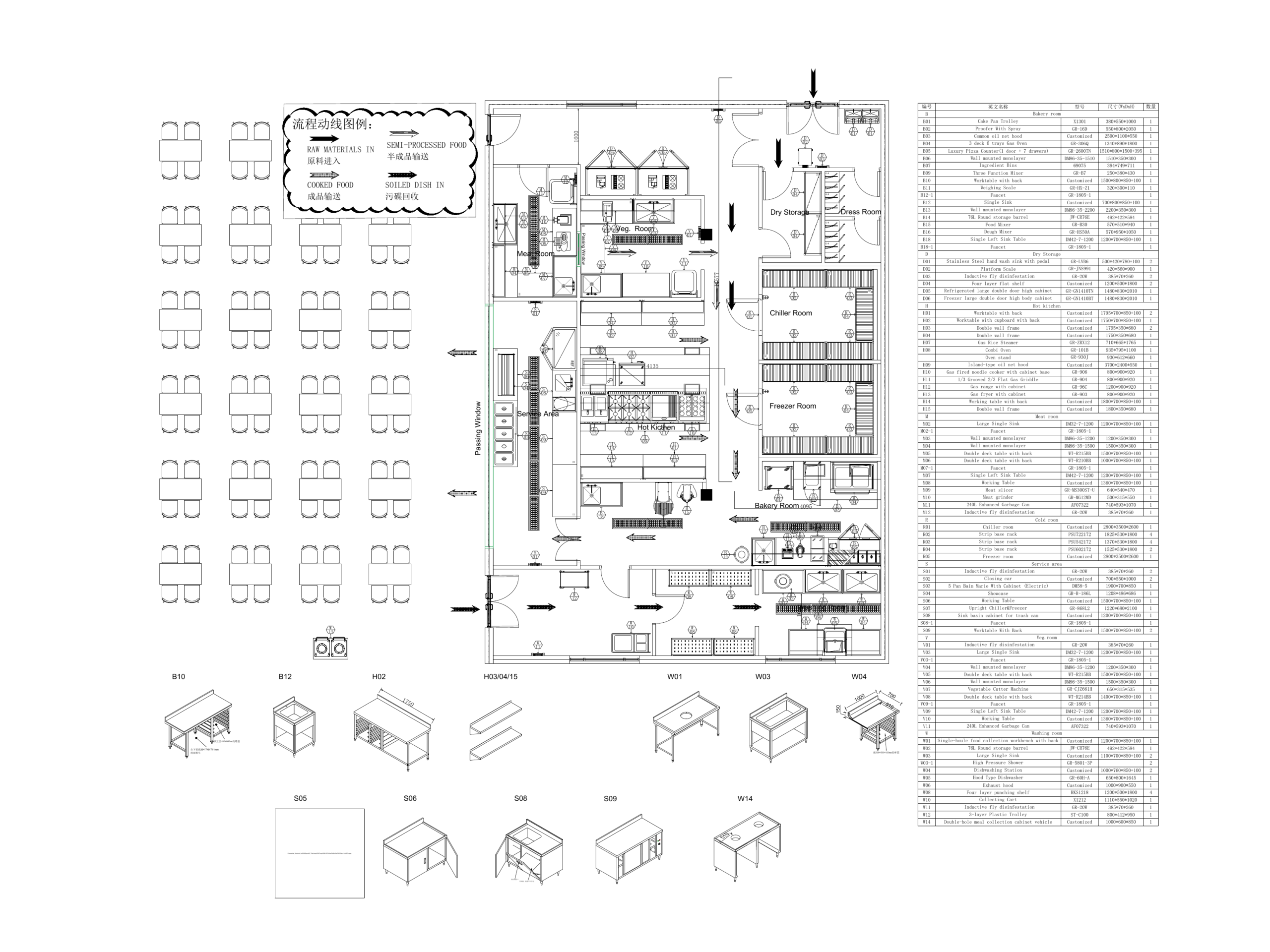
In the Tanzania drawing, the route legend distinguishes incoming ingredients, semi-processed food, cooked food and used dishes. Follow the cooked-food arrows to the serving window, then trace the separate used-dish entry towards the wash area. For a hospital with ward distribution, extend the route review to trolley parking, lift access and the ward’s handover point.
Check the return peak by rack type
Suppose 180 used meal trays arrive in 30 minutes. At eight trays per rack, allow 23 racks in 30 minutes, a pace of 46 racks an hour for trays alone. In a short burst, if 48 of those trays arrive in five minutes and three full racks from that delivery have cleared the line, 24 trays are still in the wash process or waiting. Mark where that load sits on the soiled side and check the dispatch route stays clear. Count bowls, lids and cutlery separately, then time the whole scrape, pre-rinse, wash and unload sequence.
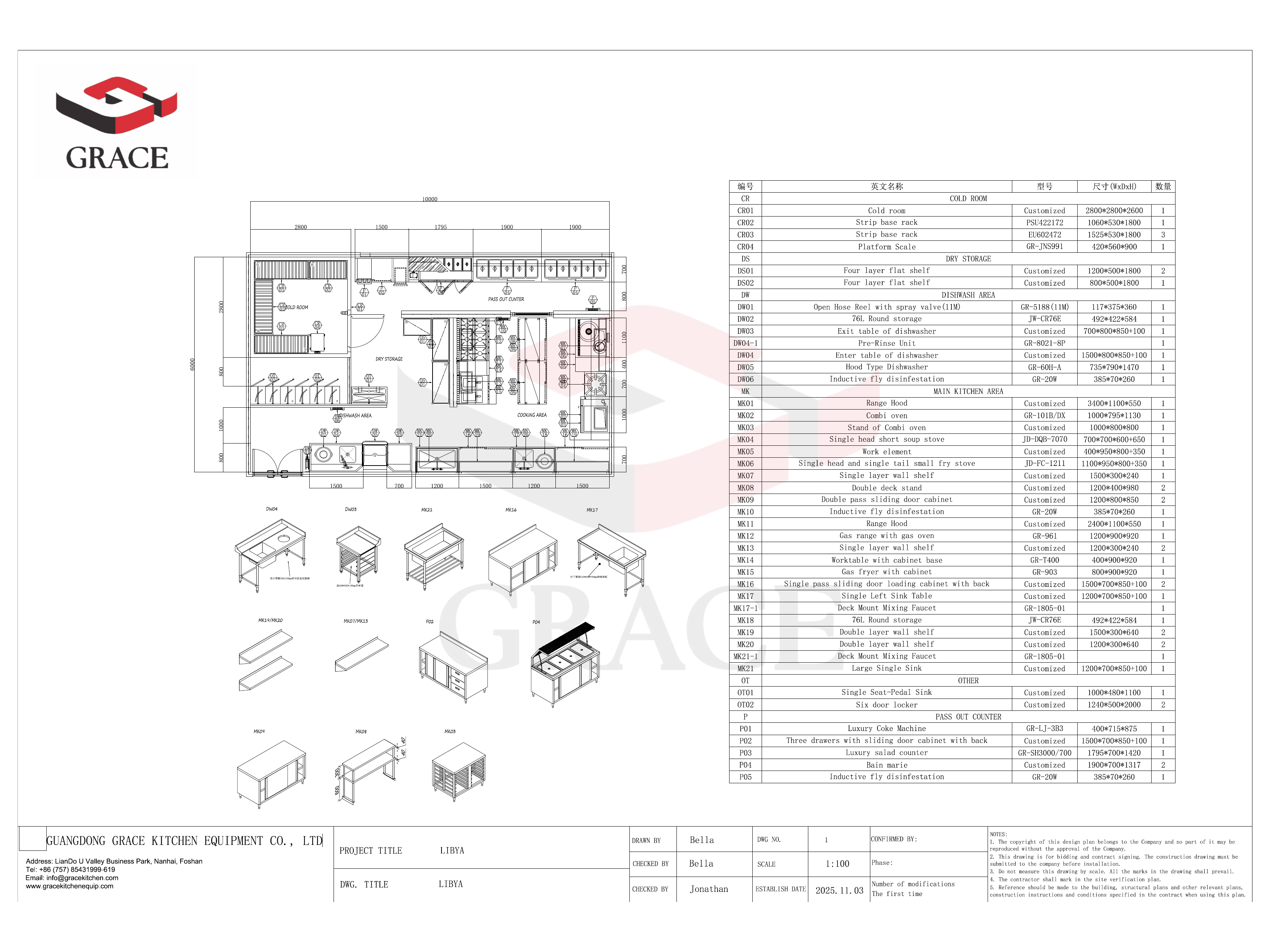
The Libya equipment schedule identifies the pre-rinse at DW04-1, the infeed table at DW04, the hood dishwasher at DW05 and the discharge table at DW03. Apply the same equipment-number check to your plan. Ask the installer to confirm water service, waste connection and maintenance access, and show where an incoming rack can wait while the clean side is unloading.
Hospital kitchen equipment list and fit-out quotation
Build the list from the planned workload. Include bulk cooking equipment and refrigeration, stainless steel preparation and checking benches, ward food trolleys and holding equipment, and the commercial dishwasher with its wash-up tables. Put the tray format, batch size or rack mix beside each item so suppliers can quote for the same work.
Commercial Kitchens Kenya and ISMAN both include hospitals among the settings they serve and describe kitchen design, fabrication and installation. On the same equipment schedule, mark what each offer includes, what is optional and what the hospital’s contractor will provide. Commercial Kitchens Kenya · ISMAN Engineering
| What to buy | What the quote and drawing should show |
|---|---|
| Batch cooking and preparation | Working batch size using the hospital’s recipes, release times to the trayline, preparation and holding space for the different meal types. |
| Tray check and hold station | Bench dimensions, space for the authorised order list and a separate hold position. Show the route a replacement tray takes back to the check point and the trolley. |
| Ward trolley route | Usable slots with the actual trays and lids, loaded size, clean parking and the time allowed for travel, release and loading. Quote the intended holding method with its operating requirements. |
| Return and warewashing | Rack types and tested throughputs, soiled-side capacity, pre-rinse and infeed table, clean discharge table, water and drainage points. Show where the return surge will wait. |
| Site scope and handover | Confirm the drawing revision and who provides site services, delivery, positioning, connections, GRACE on-site installation, testing, operator briefing and model-specific spares. |
What goes into a hospital kitchen fit-out cost in Kenya?
A 2021 kitchen-equipment tender for Gatundu Hospital covered supply, delivery, installation and commissioning. For your project, ask for separate amounts for equipment and custom fabrication, delivery to the named Kenyan site, and on-site installation and commissioning. Record the currency, quote validity, tax basis and any building works priced separately. If proposals use different currencies, compare them in Kenyan shillings (KES) using the same exchange-rate date. Gatundu Hospital kitchen equipment tender
Can the kitchen be refurbished while it stays in service?
Ask the hospital to identify the routes and workstations it needs during the refurbishment. For each phase, agree the temporary arrangement for meal dispatch and dish return, who prepares the site services and which checks will release the new equipment for use before the next phase starts.
Record what happens at 11:58 and 12:10
Rehearse the full departure schedule before handover, including the overlap with the return surge. Use project-specific acceptance limits and agree who signs off each step. Kenya’s Ministry of Health publishes a general food hygiene checklist that the hospital can consult alongside its own requirements. Kenya Ministry of Health food hygiene checklist
| Rehearsal | Record at handover | Proposed reviewer |
|---|---|---|
| 11:58 meal-order change | Time of change, original tray set aside, replacement checked and loaded or next handover confirmed with the ward. | Catering and the hospital’s authorised order lead |
| Ward dispatch and receipt | Ready count for each wave, departure and receipt times, holding checks and time each trolley is clean and ready for reloading. | Catering and ward receiving team |
| 12:10 return surge | Number of trays arriving, peak backlog location, whether the dispatch path stays clear and when clean racks leave the line. | Catering and infection-prevention team |
| Installation and operator handover | Equipment numbers and drawing revision, utility connection checks, operator briefing and the owner of each agreed follow-up item. | Hospital facilities lead and installation team |
GRACE can coordinate equipment selection, stainless steel fabrication and on-site installation against the approved layout. Agree the division of work for building services, final connections and commissioning in the proposal, then keep the same equipment numbers on the handover sheet.
PLAN YOUR KENYA HOSPITAL KITCHEN
Request a hospital kitchen equipment quotation
Send GRACE the project town or county, measured floor plan, meals per departure, trolley routes, tray dimensions, available site services and target opening date. Use anonymised sample labels. GRACE can use the brief to prepare a layout, an itemised equipment schedule and an on-site installation proposal.