
How to Bake Basque Cheesecake in a Commercial Deck Oven
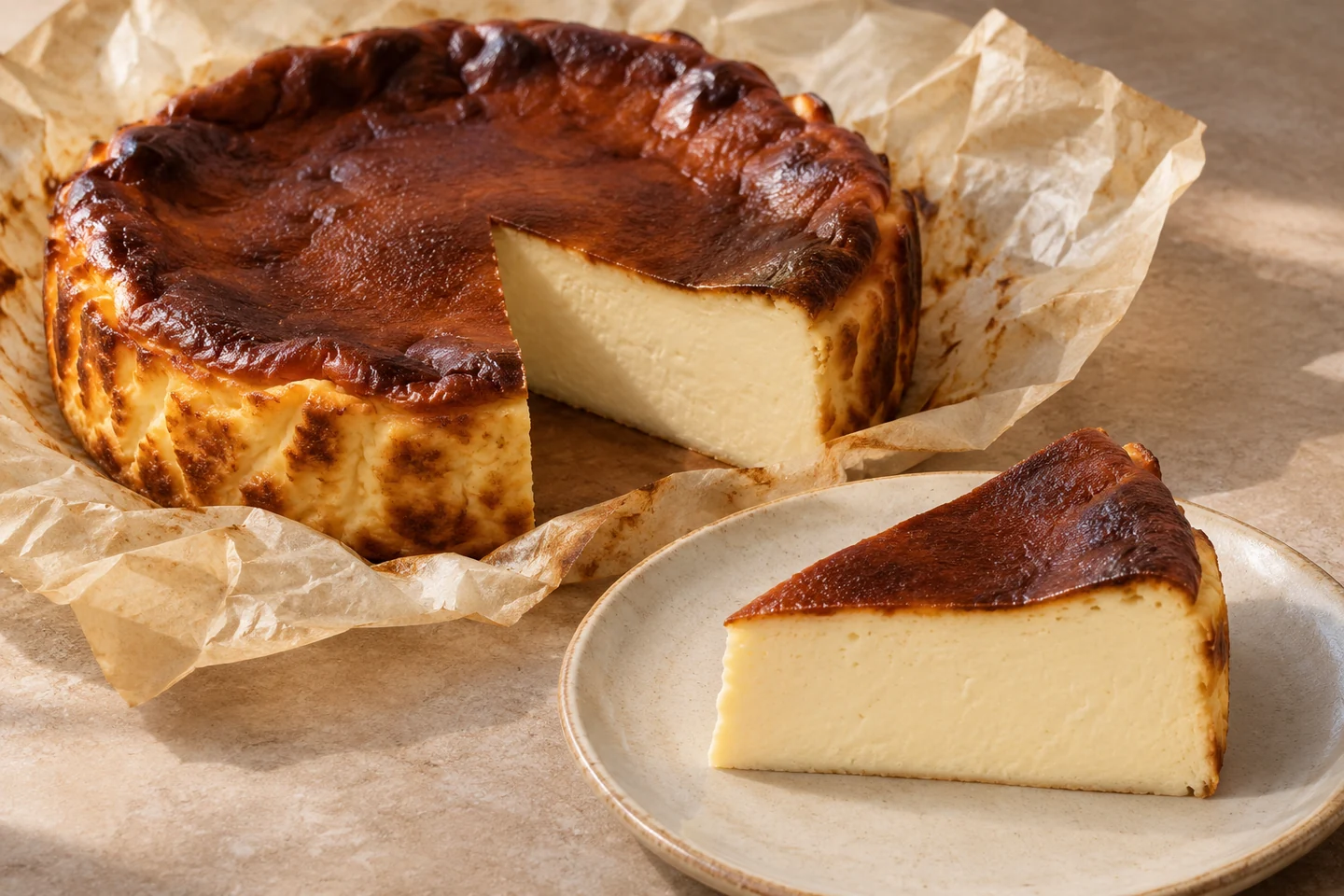
Prepare a crustless Basque-style cheesecake with a deeply browned top and a smooth, creamy filling that slices cleanly when chilled. This small batch suits a café dessert counter or a bakery training session.
Basque-style cheesecake with a caramelised top and creamy chilled filling. AI illustration.
Batch formula for two 20 cm cakes
Target yield: Two cakes, cut into eight slices each for 16 portions. Use two matching 20 cm round metal tins at least 7 cm deep. The batter totals 2,236 g. Start with 1,100 g per tin, allowing 36 g for bowl and transfer losses. Check the fill against your actual tins before loading.
| Ingredient | Batch weight |
|---|---|
| Full-fat cream cheese, softened | 1,000 g |
| Caster sugar | 300 g |
| Pasteurised liquid whole egg, unsweetened | 400 g |
| Whipping cream, approximately 35% fat | 500 g |
| Cornflour (cornstarch) | 24 g |
| Vanilla extract | 8 g |
| Fine salt | 4 g |
| Total batter | 2,236 g |
Set out a scale, mixing bowl and paddle or sturdy spatula, sieve, scraper, oven thermometer, fine-tip food probe and cooling rack. Use baking parchment rated for the selected oven temperature. Plan the cakes’ cooling and refrigerated storage space before mixing. Contains milk and egg.
A small-batch oven for a café
El GRACE GR-101D electric deck oven has a single chamber with a one-tray rating and separate upper and lower heat controls. It provides a compact starting point for learning the relationship between surface colour and the centre of a cheesecake.
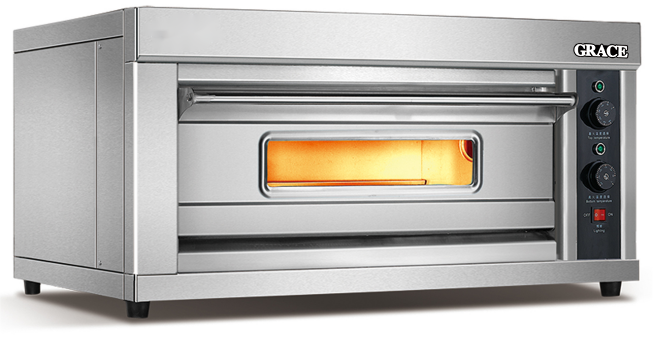
| Especificación | GR-101D |
|---|---|
| Configuración | 1 deck, 1 tray |
| Listed power | 4.4 kW |
| Listed supply configurations | 220 V / 380 V |
| Heating controls | Separate top and bottom controls |
Before mixing, place both lined tins on the supplied tray and check clearance between the tins, chamber walls and heating elements. If your tray accommodates one tin with the required clearance, make a half batch for each run. Confirm the exact electrical configuration, circuit and installation dimensions from the supplied unit’s nameplate and instructions.
For a larger tray plan, consider the GR-102D, listed for two trays at 6.6 kW. A five-tray GR-5D convection oven can suit a broader bakery menu, with a listed 380 V supply and 7.5 kW power. Compare them in the GRACE bakery equipment specifications. Trial the cheesecake load and settings on each model you use.
Line the tins and mix the filling
- Prepare one cake for the pilot. Halve all ingredient weights, giving 1,118 g batter, and aim to transfer 1,100 g into one tin. Once that result is consistent, test the full two-cake batch. Keep the tin type and fill weight consistent.
- Line and check clearance. Crumple, open and fit the parchment to cover each tin’s base and sides. Allow room for the cake to rise, then fold excess paper outward and secure it around the rim so the cake’s surface stays open to the heat. Keep paper clear of the elements and oven walls.
- Make a smooth batter with little added air. Stir or paddle the softened cream cheese, sugar and salt until smooth. Scrape the bowl, then add the egg in several portions. Blend the cornflour with a little of the measured cream until smooth, add it with the remaining cream and vanilla, and mix just until uniform. Scrape and check the base of the bowl for lumps.
- Weigh the fill. Tare each lined tin and add 1,100 g batter. Tap gently to release large bubbles. Check that there is adequate headroom for expansion, then load promptly. Record the batter temperature during the trial so future batches start under similar conditions.
Preheat, bake and check the GR-101D
- Preheat before the batter is ready. Check that the oven is clean and the door closes correctly. Begin the trial at 230°C (446°F) top heat and 220°C (428°F) bottom heat. Use parchment suitable for these temperatures. Check chamber temperature near tray height with an independent oven thermometer and allow the oven to stabilise before loading.
- Load the tray gently. Use the same planned tray position for each pilot. In the two-cake trial, keep space around each tin and close the door promptly. Start the timer when the door closes.
- Check from 25 minutes. Look through the window first. Aim for a dark caramelised top, a set outer ring and a centre that moves together when the tin is nudged gently. The centre must also meet the cooking check. Use a clean fine-tip probe in the centre, clear of the metal base, and verify 75°C for at least 30 seconds, one of the Food Standards Agency’s cooking temperature-time combinations. Continue cooking as needed and record each cake’s result. Use your kitchen’s approved food safety procedures.
- Record colour and the full cycle. Check both cakes in the full-batch trial. If the surface is becoming too dark before the centre is ready, reduce upper heat and continue to check the centre. Use the next pilot to refine heat balance, fill weight and loading. The temperature settings and 25-minute first check are starting points for this recipe.
Cool, chill and portion
Keep each cake supported in its tin while it firms. Place on a rack in a protected area, then move into your approved rapid-cooling process promptly. Record cooling progress and confirm it meets your kitchen’s cooling limits before storing. The UK food-business chilling guidance recommends setting the fridge to 5°C or below. Cover once chilled and label the preparation date and use-by time under your food safety plan.
For a clean cut, let the cake become fully cold before unmoulding. Cut each cake into eight with a clean knife, wiping it between slices. Check a sample for a smooth, set filling and an evenly browned top. Keep the portions refrigerated and bring out small amounts for service.
What to change on the next trial
| Problem | Adjustment |
|---|---|
| Very dark top before the centre is ready | Reduce upper heat and extend the bake as needed to meet the centre check. Compare the batter temperature and fill weight with the pilot record. |
| Pale surface with a firm filling | Verify the upper heating control and actual chamber temperature. In the next pilot, adjust upper heat in a small step and check colour earlier. |
| Lumps or too many large bubbles | Soften the cream cheese enough to mix smoothly, scrape thoroughly and add liquid gradually. Keep mixing gentle after the egg is added. |
| Wet centre after chilling | Review the centre-temperature record and cooling process. Check the egg, cream and cornflour weights, then repeat the pilot before setting the service recipe. |
Clean after the batch
Switch the GR-101D off and let the chamber cool. Follow the unit instructions and site procedure for isolating power. Remove loose paper and food debris, wash the tray separately and clean the door and seal with approved products. Keep water out of the controls, remove cleaning residue as directed and dry the chamber before the next shift.