U.S. Commercial Kitchen Market Report

Executive Summary
The American commercial kitchen market is one of the largest and most advanced globally, supported by a mature foodservice industry, high consumer spending on dining out, and continuous technological innovation. Our company, Grace, is a kitchen supplier that has expanded its business from Asia to Europe and America. Hilton Hotels is also one of our clients. Commercial kitchens serve restaurants, hotels, institutional foodservice providers, and emerging formats such as ghost kitchens and food halls. Demand is driven by the need for efficiency, food safety, labor optimization, and energy savings, positioning the market for steady long-term growth.
Market Overview
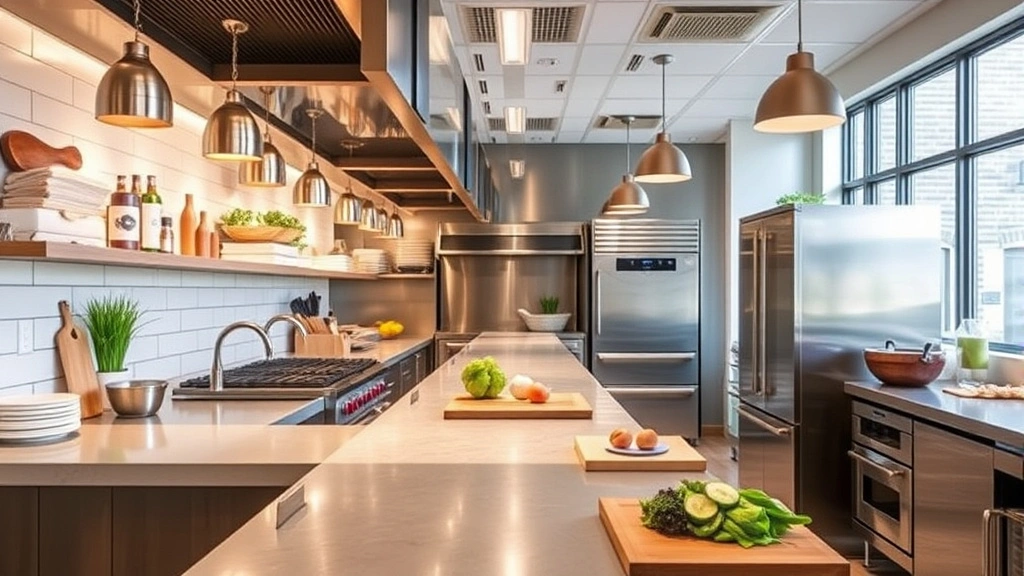
Commercial kitchens in the United States encompass a wide range of systems and equipment, including cooking appliances, refrigeration, ventilation, warewashing, food preparation equipment, and integrated digital technologies. The market is characterized by strong replacement demand, as operators regularly upgrade equipment to meet regulatory requirements and improve operational performance.
The U.S. market places a premium on durability, standardized design, and high-capacity solutions, particularly among chain restaurants and institutional buyers. At the same time, smaller and delivery-focused operators increasingly favor compact and modular kitchen configurations.
Key Market Drivers
Expansion of the Foodservice Industry
Continued growth in quick-service restaurants (QSRs), fast-casual dining, and institutional foodservice remains a core driver of commercial kitchen demand. These segments require reliable, high-throughput kitchen systems capable of maintaining consistency and speed during peak operating hours.
Growth of Ghost Kitchens
Ghost kitchens have become a significant structural trend in the American market. Designed primarily for delivery and takeout, these kitchens emphasize space efficiency, rapid deployment, and standardized equipment. Their expansion has created strong demand for modular, flexible, and cost-effective kitchen solutions.
Labor Shortages and Productivity Needs
Persistent labor shortages in the U.S. foodservice sector have accelerated investment in labor-saving equipment. Automated cooking systems, multifunctional ovens, and advanced dishwashing solutions help operators reduce staffing requirements while improving productivity and consistency.
Energy Efficiency and Sustainability
Energy and water efficiency are increasingly important purchasing criteria. Operators seek equipment that lowers utility costs and supports sustainability goals, driving adoption of ENERGY STAR–certified appliances, induction cooking, and efficient ventilation systems.
Technology and Innovation Trends
Digital transformation is reshaping commercial kitchens across the United States. Smart and connected equipment enables remote monitoring, performance analytics, and predictive maintenance. These technologies are especially attractive to multi-unit operators, allowing centralized control and consistent execution across locations.
In addition, modular kitchen design and standardized workflows are gaining traction, enabling operators to adapt quickly to menu changes, new concepts, or business expansion.
Competitive Landscape
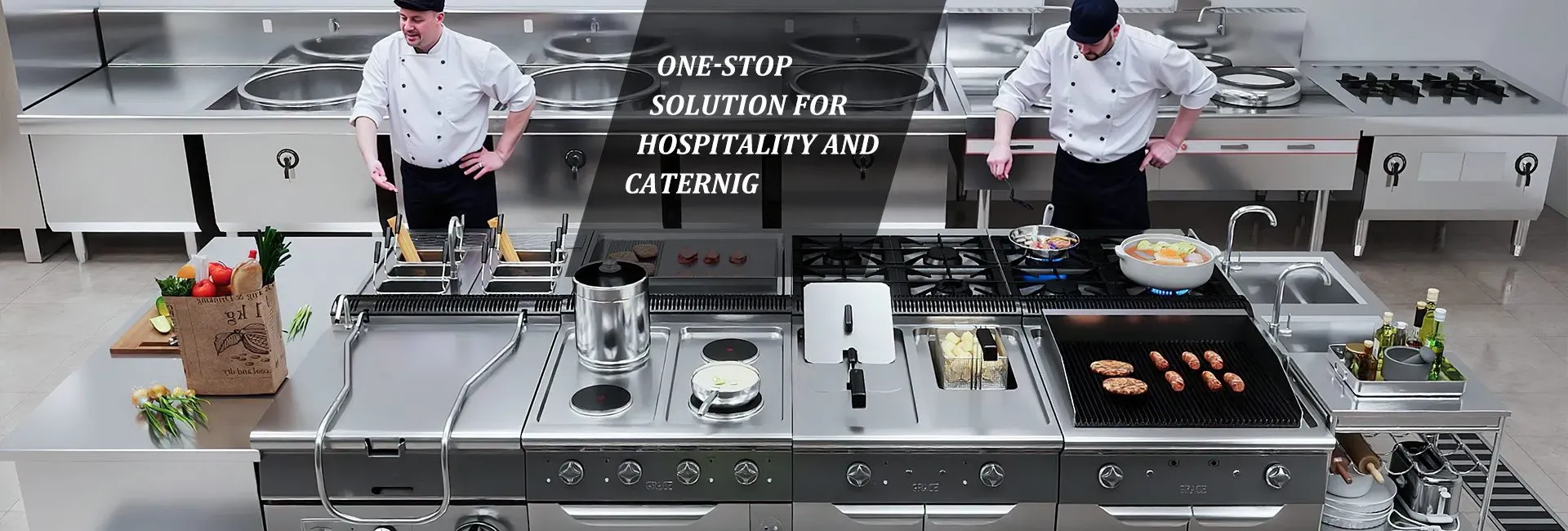
The U.S. commercial kitchen market is highly competitive, featuring global manufacturers, domestic equipment brands, and specialized solution providers. Competition is based on product quality, energy efficiency, innovation, and the strength of distribution and service networks. Suppliers that offer integrated kitchen solutions and reliable after-sales support are better positioned to build long-term customer relationships.
Regulatory Environment
Commercial kitchens in the United States must comply with strict health, safety, and environmental regulations. Local health codes, fire and ventilation standards, and certification requirements significantly influence equipment selection, kitchen layout, and installation practices. Regulatory compliance remains a critical factor shaping market demand.
Challenges
Despite favorable market fundamentals, challenges include high initial investment costs, supply chain volatility, space constraints in urban areas, and increasing regulatory complexity. These factors require operators and suppliers to carefully balance cost, performance, and compliance.
Market Outlook
The outlook for the American commercial kitchen market remains positive. Growth will be supported by ongoing foodservice expansion, technological innovation, and the evolution of delivery-oriented dining models. Companies that focus on automation, energy efficiency, digital integration, and flexible design are expected to gain a competitive advantage in the years ahead.
Our slogan is ‘Better Equipment, Better Food’. Our mission is to make high-quality kitchen equipment available to more people around the world.
Answer: Absolutely. All our equipment, including Combi Ovens and Commercial Dishwashers, is manufactured to rigorous international standards. Depending on your market requirements, we provide CE, NSF, or ETL certifications. All food-contact surfaces are made of food-grade SUS304 stainless steel, ensuring maximum food safety and durability in heavy-duty commercial environments.
Answer: We offer deep customization services for global power grids. During the order confirmation phase, our engineers adjust the electrical configurations based on your local standards (e.g., 380V/50Hz 3-Phase or 220V/60Hz). For gas-powered equipment, we support Natural Gas (NG) or Liquid Propane (LPG) conversions and provide pressure-reducing valves that meet local regulations.
Answer: Yes, we can. Our professional kitchen solution team provides comprehensive design services. Simply provide us with your kitchen dimensions or floor plans, and we will deliver a detailed CAD equipment layout within 48 hours. Our designs prioritize optimized workflow—from receiving and storage to prep, cooking, plating, and warewashing—to maximize your operational efficiency and reduce labor costs.
Answer: We provide a 24-month global warranty on all core components. Each shipment includes a wear-and-tear parts kit (e.g., gaskets, heating elements) at 1-2% of the order value. For technical issues, we offer 24-hour remote video diagnostics. If urgent parts are needed, we utilize express couriers like DHL/FedEx to ensure your kitchen operations face minimal downtime.
Answer: Yes, we have extensive experience as an OEM partner for several international catering brands. Whether you need laser-etched branding, specific dimension adjustments, or functional modifications tailored to a particular cuisine, our R&D team is equipped to support your brand’s expansion with flexible manufacturing solutions.