
Critical Electrical Tips for Commercial Kitchen
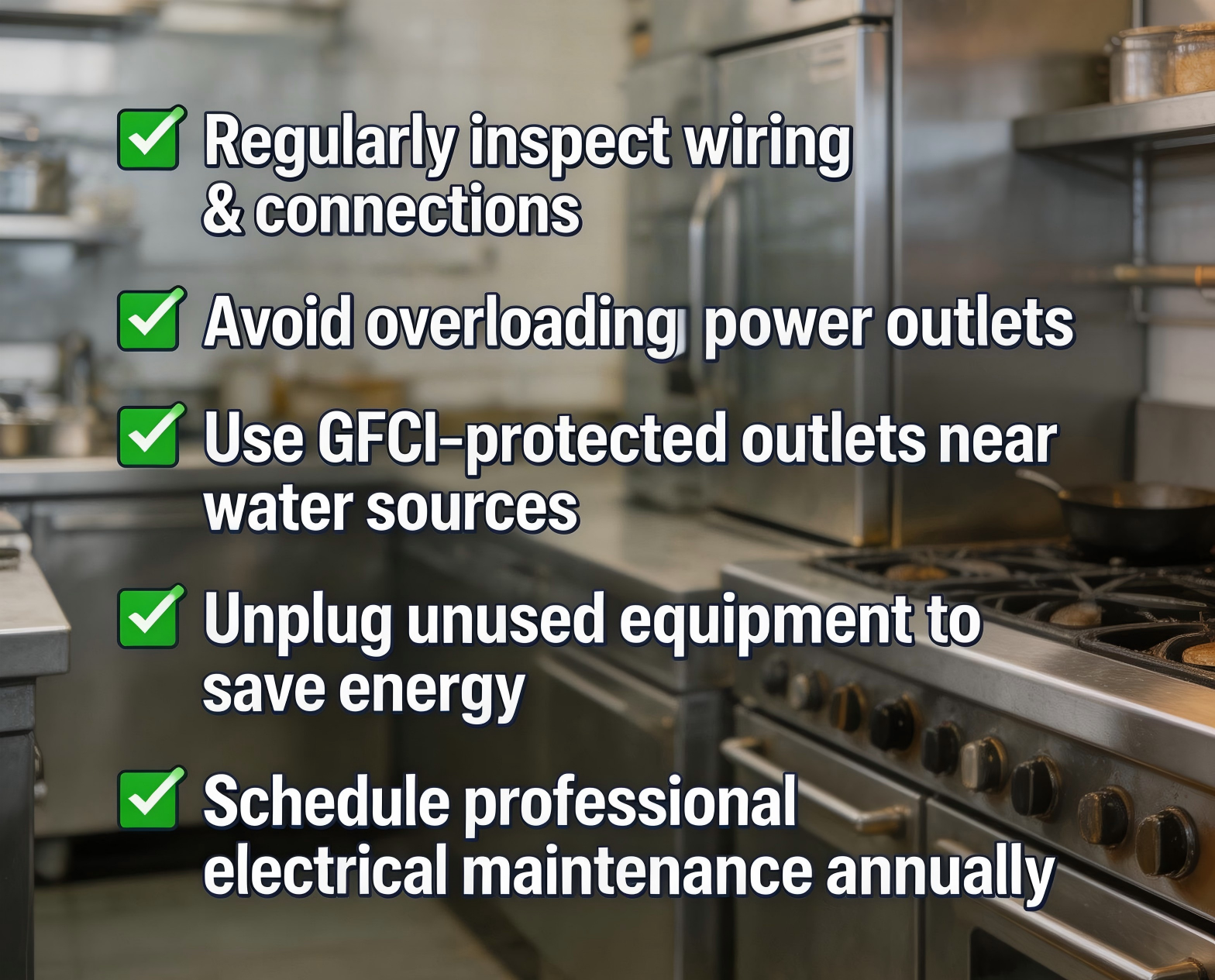
Designing a commercial kitchen is a complex ballet of equipment, workflow, and safety. Above all,lies the most crucial system: electrical infrastructure. Getting this right from the start ensure you trouble free installation for kitchen equipment. Here are the five important considerations for your commercial kitchen’s electrical setup.
1. The Power Plan: Capacity, Circuits, and Code
Load Calculation & Circuits: No doubt that a professional must calculate your total electrical load, factoring in all equipment (ovens, fryers, refrigeration, HVAC) with their high starting currents (inrush). Each of them needs its own properly rated circuit to prevent overloads and nuisance tripping.
GFCI: Ground Fault Circuit Interrupter (GFCI) outlets are mandatory within 1.8 meters (6 feet) of any water source—sinks, prep areas, dish pits. They protect against lethal electrical shock.
Ventilation : Your exhaust hood system, often the largest motor, requires its own dedicated circuit. Remember, its operation is tied to connected cooking equipment via an interlock (see below).
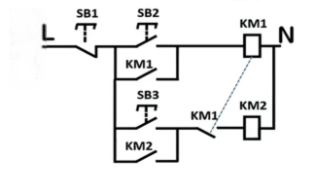
interlocking for commercial kitchen
Future-Proofing: Install spare conduit runs and consider a panel with spare capacity. Adding a piece of equipment later should not require a complete rewiring.
2. The Safety: Interlocks, Fire Systems & Clear Labeling
Hood Fire Suppression & Electrical Interlock: This is essential. The ANSI/UL 300 fire suppression system over cooking equipment must be interlocked with the hood fan and the source (gas or electric) for the connected appliances. Upon activation, it cuts power/fuel to the equipment while keeping the hood running to evacuate smoke.
Emergency: Clearly marked, easily accessible emergency gas & electric shut-offs are required for equipment and entire kitchen.
Label: Every circuit breaker and shut-off valve must be clearly and permanently labeled. This saves critical time during emergencies or repairs.
3. Placement:Where Utilities & Equipment Converge
The Dry Zone: Electrical panels, outlets, switches, and disconnects must be located away from direct spray from sinks and dishwashers. Maintain required clearances.
Behind the Lines: Create detailed equipment schedules with exact utility requirements (voltage, amperage, water pressure, drain size, gas BTU). Finalize your equipment list before finalizing plans.
Access: Place shut-off valves and drain clean-outs where they can actually be reached, not buried behind fixed equipment. Consider access panels.
In a nutshell: Your kitchen’s utilities are its circulatory and nervous systems. Investing in a robust, well-planned, and code-compliant installation is the foundation for a safe, efficient, and profitable operation. Never cut corners here—the cost of getting it wrong is far greater than the investment in getting it right.
Do your commercial kitchen products comply with international safety and hygiene standards?
Answer: Absolutely. All our equipment, including Combi Ovens and Commercial Dishwashers, is manufactured to rigorous international standards. Depending on your market requirements, we provide CE, NSF, or ETL certifications. All food-contact surfaces are made of food-grade SUS304 stainless steel, ensuring maximum food safety and durability in heavy-duty commercial environments.
How do you ensure the voltage and energy types of exported equipment are compatible with my local site?
Answer: We offer deep customization services for global power grids. During the order confirmation phase, our engineers adjust the electrical configurations based on your local standards (e.g., 380V/50Hz 3-Phase or 220V/60Hz). For gas-powered equipment, we support Natural Gas (NG) or Liquid Propane (LPG) conversions and provide pressure-reducing valves that meet local regulations.
Can you provide professional kitchen layout designs (CAD/3D) for overseas catering projects?
Answer: Yes, we can. Our professional kitchen solution team provides comprehensive design services. Simply provide us with your kitchen dimensions or floor plans, and we will deliver a detailed CAD equipment layout within 48 hours. Our designs prioritize optimized workflow—from receiving and storage to prep, cooking, plating, and warewashing—to maximize your operational efficiency and reduce labor costs.
How do you handle after-sales service and spare parts for international customers?
Answer: We provide a 24-month global warranty on all core components. Each shipment includes a wear-and-tear parts kit (e.g., gaskets, heating elements) at 1-2% of the order value. For technical issues, we offer 24-hour remote video diagnostics. If urgent parts are needed, we utilize express couriers like DHL/FedEx to ensure your kitchen operations face minimal downtime.
Do you support bulk customization (OEM/ODM) for global restaurant chains?
Answer: Yes, we have extensive experience as an OEM partner for several international catering brands. Whether you need laser-etched branding, specific dimension adjustments, or functional modifications tailored to a particular cuisine, our R&D team is equipped to support your brand’s expansion with flexible manufacturing solutions.