
How to Bake Pizza in a Commercial Conveyor Oven
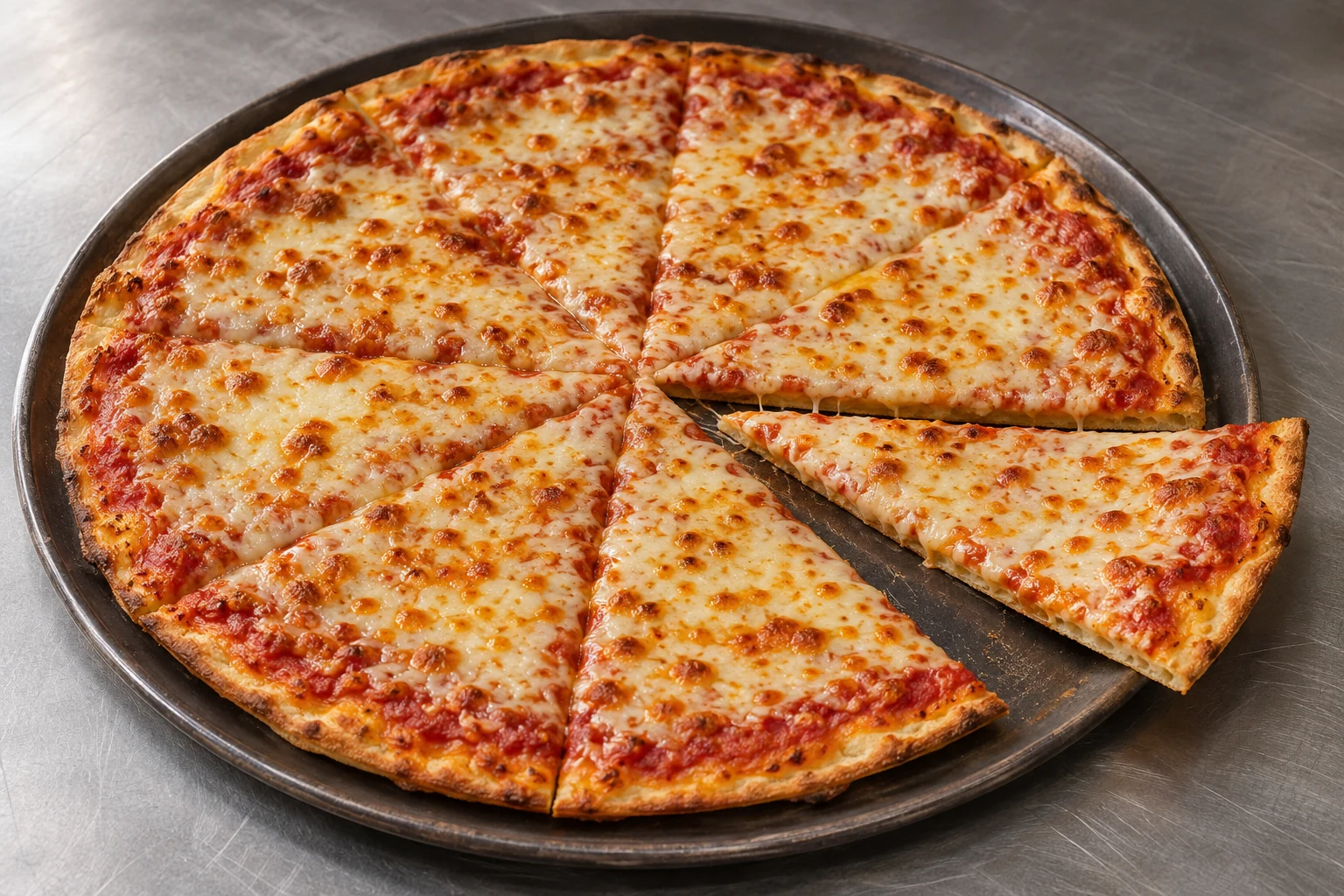
Start with a 12-inch thin-crust cheese pizza, then use the same dough weight, toppings and screen to find a bake your crew can repeat during service.
Cover image: AI-generated illustration of a 12-inch thin-crust cheese pizza.
This guide is for small pizzerias, takeaway shops and kitchens training a new pizza station. The equipment example is the GRACE GR-GP-24H gas conveyor pizza oven. Use the instructions for your installed oven to confirm the approved baking surface, startup procedure and control settings.
1. Weigh a six-pizza test batch
This starting formula makes about 1.32 kg of dough, or six portions of roughly 220 g each. Use the same flour, sauce and cheese throughout the test.
| Dough ingredient | Weight |
|---|---|
| Bread flour | 800 g |
| Water | 480 g |
| Fine salt | 16 g |
| Sugar | 8 g |
| Olive oil | 16 g |
| Instant yeast | 2 g |
Per pizza: 220 g dough, 65 g pizza sauce and 90 g shredded low-moisture mozzarella.
- Combine the flour, instant yeast and sugar. Add the water and mix until the flour is hydrated. Add the salt and work in the oil, then knead until the dough is smooth and stretches without tearing easily.
- Divide into six equal portions, shape them into balls and place them in covered dough boxes. Refrigerate the covered balls overnight. Before stretching, let them relax until they open easily without snapping back.
- Stretch one dough ball to 12 inches (about 30 cm), leaving a narrow rim. Set it on the oven-approved pizza screen or pan you plan to use in service. Spread the sauce evenly, add the cheese and load the pizza promptly.
2. Dial in the bake with one pizza at a time
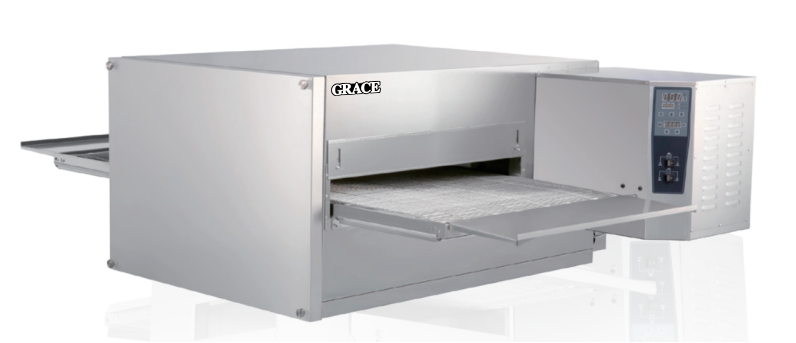
The GR-GP-24H has a 645 mm wide conveyor and measures 1,690 × 1,150 × 535 mm. It uses gas for heat and requires a 380 V / 50 Hz electrical supply. Check the clearance and utility requirements for your installation before ordering.
Preheat fully according to your oven instructions. For the first pie, use the thin-crust starting settings supplied for your installed oven. If you need a starting point, give your equipment supplier the pizza size, dough weight and screen type. Write down the set temperature, the belt or bake-time setting, and the screen or pan you used. If the control displays a speed rather than a bake time, record that setting and time how long the leading edge takes to travel from the entrance to the exit of the heated chamber.
Check the first pie as soon as it exits. Look for an evenly colored underside and fully melted cheese. Cut through the middle and check for a wet or gummy layer under the sauce. Make one change at a time and let the oven settle after a temperature change before you bake the next pie.
| What you see | What to try next |
|---|---|
| Pale base and underbaked center | Keep the temperature steady and increase the time in the oven by one small increment. |
| Dark rim or cheese before the center sets | First check that the dough thickness and topping weights match the recipe. If they do, lower the set temperature one step and retest. If the center still needs time, increase the bake time in the following trial. |
| Good on the screen, soft after boxing | Compare two pies after the same time in the same takeaway box. Try letting steam escape briefly on a rack before boxing one of them. |
When the first pie passes, bake another at the same settings. Record the temperature, belt setting or measured bake time, screen type and portion weights, then photograph the underside and center cut for your crew.
3. Find the pace your shop can sustain
Prepare a larger batch using the same portions. After the oven has warmed up, have your crew stretch, top, load and box at the pace you expect during a rush. Keep screens clear of one another and use the loading pattern allowed by the oven instructions. Compare the first and last pizzas for base color and center texture, and count only pies you would serve.
Example calculation: 18 sellable pizzas in 15 minutes × 4 = 72 pizzas per hour at that test pace. This is an illustration. Repeat the test over a full rush period to see whether prep, oven loading, cutting or boxing slows the line.
Give the crew a station card with the pizza size, topping weights, confirmed oven settings and a reference photo. Repeat the test when the shop introduces a thicker crust, a wetter topping or a different screen. Each can change how the pizza bakes.
Choose a conveyor oven for your menu
Share your pizza sizes, busiest-hour order count, available gas and electrical supply, and counter space with GRACE. These details help the team check the fit of the GR-GP-24H for your shop. If you are still choosing between oven styles, see the commercial pizza oven buying guide.