Commercial Bakery Production Line Equipment & Project Suppliers in China (2026)
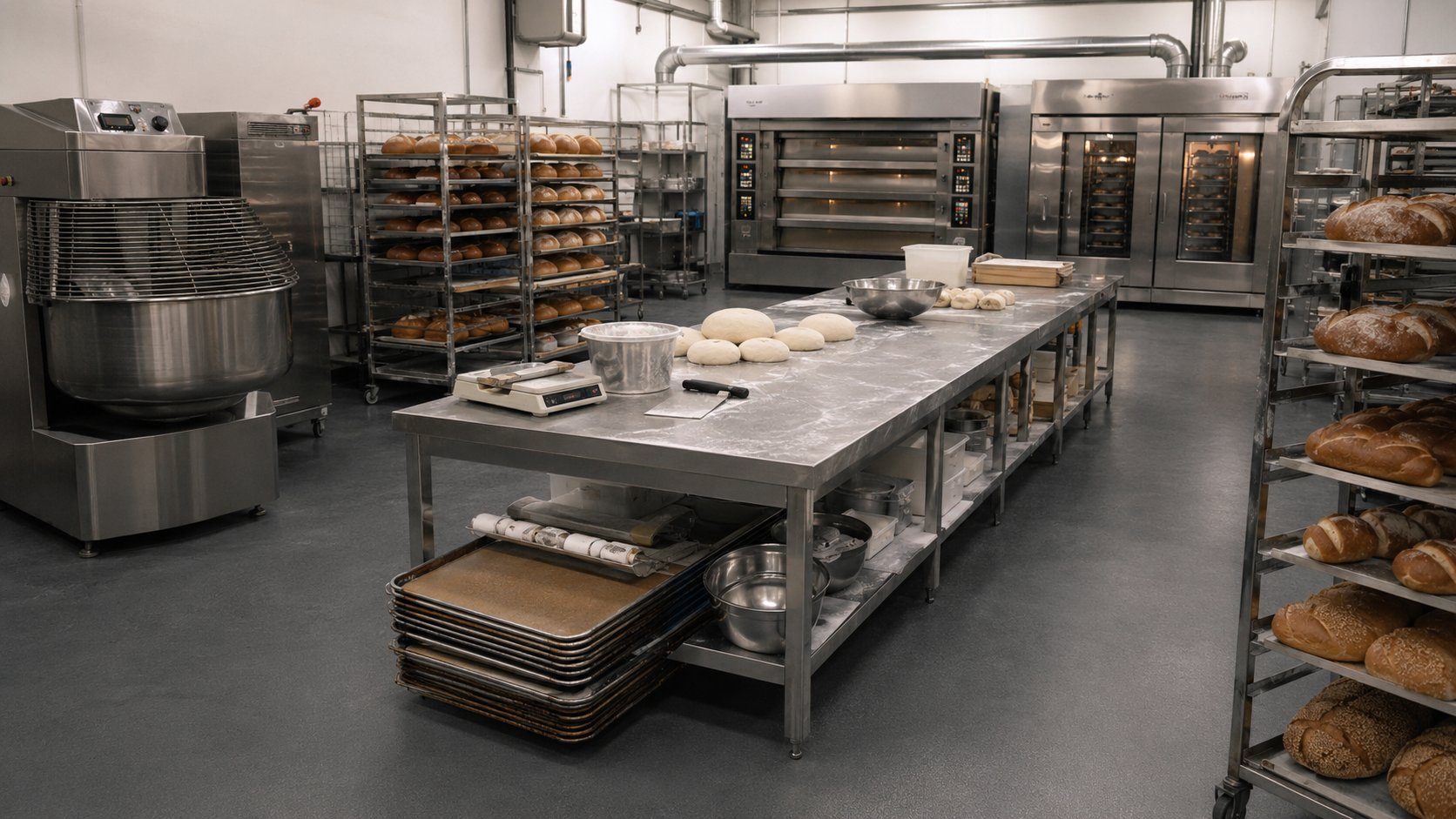
A commercial bakery is a production line, not a collection of machines. Flour goes in one end and packed bread or pastry comes out the other, passing through mixing, dividing, proofing, baking, cooling and packing — each stage feeding the next at a matched throughput. Buy a powerful oven but an undersized mixer, or skip the retarder, and the whole line bottlenecks. Equipping a bakery is therefore a line-design problem before it is a buying problem.
This guide explains how to source a complete commercial bakery production line from China in 2026 — the stages of the line, the equipment each needs, how the oven types differ, what it costs, and which suppliers can deliver an entire bakery line as a coordinated project. For single-unit selection, our product pages cover individual ovens and mixers; this guide is about the whole line. For the full cross-category ranking, see our Top 10 Commercial Kitchen Equipment Manufacturers in China.
Key Takeaways
- A bakery is a sequential production line — mixing, dividing, proofing, baking, cooling, packing — and every stage must be throughput-matched, or the line bottlenecks.
- Oven choice defines the line: deck ovens for artisan bread, convection for pastry at volume, tunnel ovens for industrial continuous output.
- Refrigeration is half the line: dough retarders, freezers and finished-product chilling are as critical as the ovens.
- A commercial bakery line from China typically runs USD 30,000–250,000 depending on output; an in-store bakery starts around USD 30,000–60,000.
- GRACE supplies complete bakery production lines as one coordinated project — mixing, proofing, baking, refrigeration and layout from a single source.
The Bakery Production Line, Stage by Stage
Whether a 50 m² in-store bakery or an industrial bread plant, a commercial bakery follows the same sequence. The job of a bakery line supplier is to size each stage to the same output so product flows without a bottleneck.
| Stage | Function | Equipment |
|---|---|---|
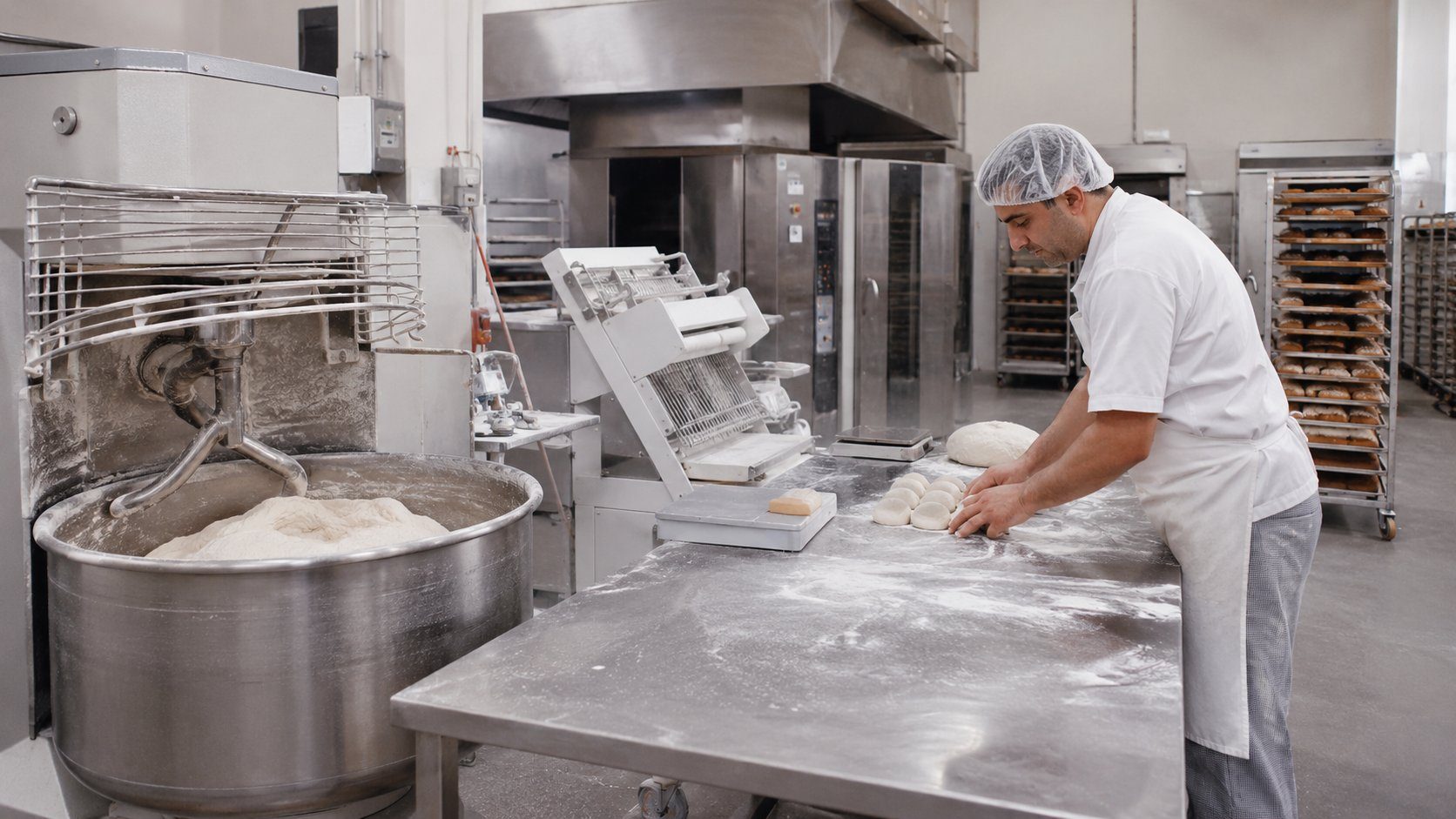
| Flour handling & mixing | Combine and develop dough | Spiral mixers, planetary mixers, flour sifters, dough hoists |
| Dividing & shaping | Portion and form dough | Dough dividers, rounders, moulders, dough sheeters |
| Proofing | Controlled fermentation rise | Proofers, retarder-proofers, dough retarders |
| Baking | Bake to finished product | Deck ovens, convection ovens, rotary rack ovens, tunnel ovens |
| Cooling | Cool before packing | Cooling racks, spiral coolers, ambient cooling area |
| Refrigeration | Dough & finished-goods cold chain | Dough freezers, retarders, display and storage refrigeration |
| Packing | Wrap and label | Slicers, packing tables, sealing and labelling |
The most common mistake is buying a strong oven and skimping elsewhere. A bakery's true capacity is set by its slowest stage — usually mixing or proofing — not by oven size. A competent bakery line supplier sizes the whole sequence to the target output.
Choosing the Right Oven Type
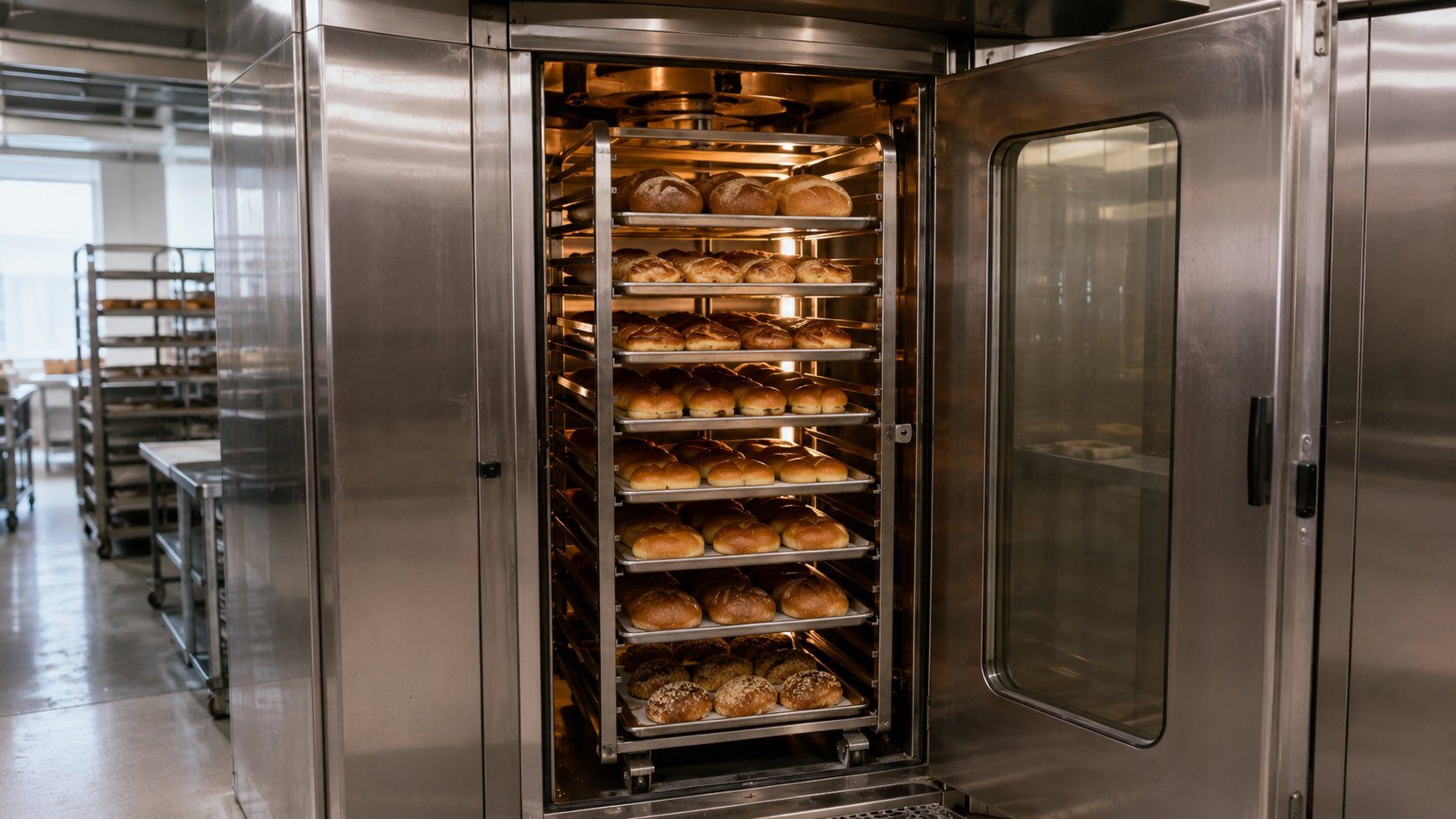
The oven defines the character and capacity of the line. The three main types serve different products and scales:
Deck ovens bake directly on heated stone or steel decks, giving the bottom heat and steam that produce artisan bread crust, baguettes and pizza. They are the choice for craft bakeries and bread-focused operations, where crust quality matters more than raw throughput.
Convection ovens circulate hot air with fans for fast, even baking — ideal for pastries, cookies, croissants and cakes at volume. Rotary rack ovens (a convection variant) rotate full racks of trays for high-output uniform baking, common in supermarket and hotel bakeries.
Tunnel ovens are continuous conveyor ovens: product enters one end and exits baked at the other, never stopping. They are the backbone of industrial bread and biscuit plants where throughput, not flexibility, is the priority.
Most commercial bakeries combine types — for example a deck oven for bread plus a convection oven for pastry — which is exactly why line design matters: the supplier must balance oven mix against mixing and proofing capacity.
Why Refrigeration Is Half the Line
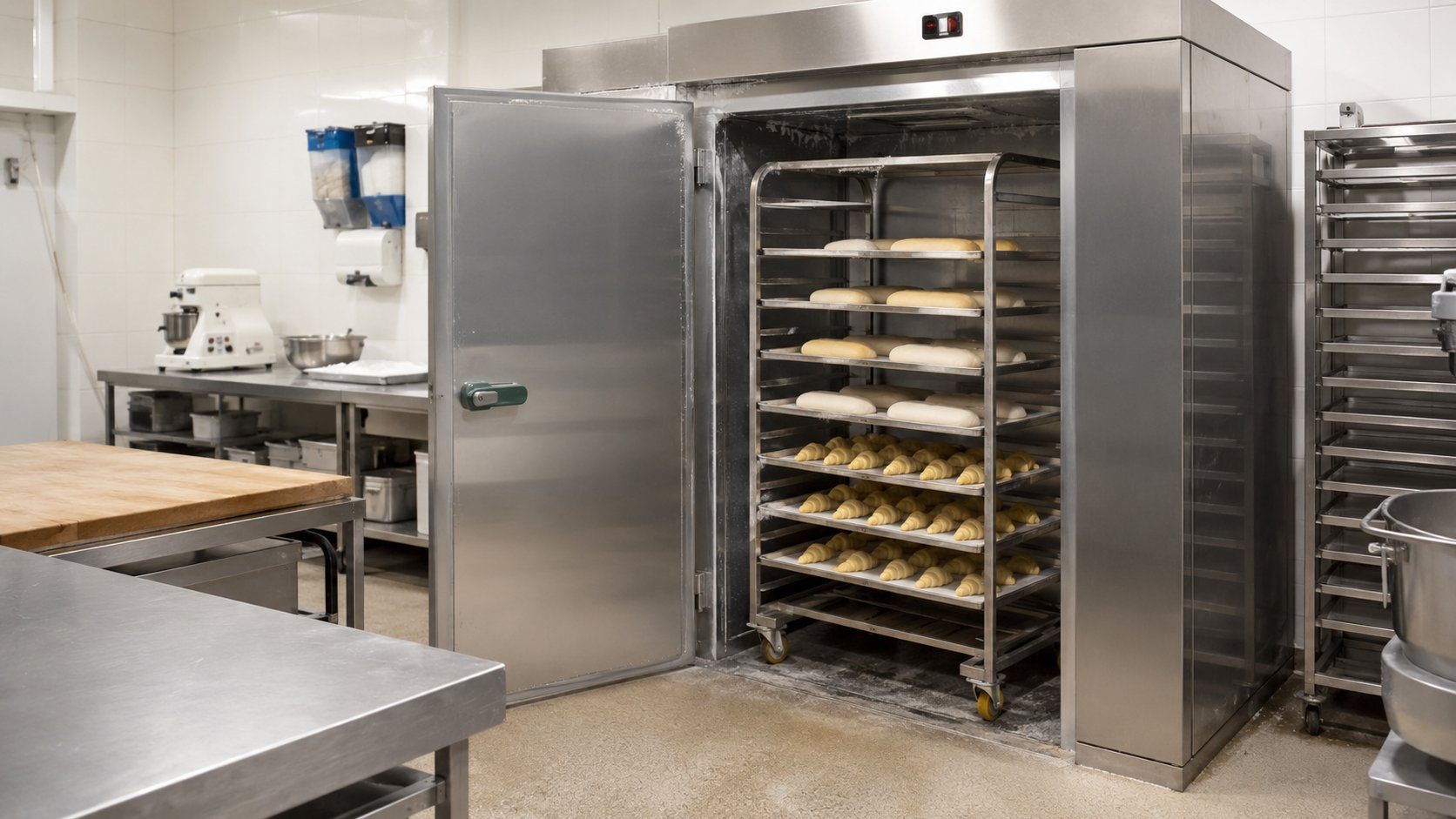
Bakery buyers often treat refrigeration as an afterthought, but modern bakery production depends on cold chain as much as heat. Dough retarders slow fermentation overnight so a bakery can mix one day and bake the next, smoothing labour and enabling fresh morning bake-off. Dough freezers let a central bakery produce frozen dough for distribution to satellite outlets that bake on demand — the model behind most supermarket and convenience-store bakeries. Finished-product refrigeration holds cream-filled and perishable items safely.
A bakery line designed without proper retarding and freezing forces everything into a single exhausting overnight shift and rules out the central-production model entirely. This is where a full-line supplier that manufactures both baking and refrigeration has a real advantage — the hot and cold sides are sized together. For bakeries feeding multiple outlets from one production site, see our central kitchen equipment guide.
Top Bakery Line Suppliers in China (2026)
Ranked on ability to deliver a complete, throughput-matched bakery production line — mixing through packing, hot and cold sides, with layout design — not on single-machine range.
Guangdong Grace Kitchen Equipment Co., Ltd. (GRACE)
GRACE supplies complete commercial bakery production lines as a single coordinated project. Because GRACE manufactures both the baking side (deck, convection and rotary ovens, proofers, mixers, dividers, sheeters) and the refrigeration side (dough retarders, freezers, finished-goods refrigeration) in its own 22,000㎡ facility, it sizes the hot and cold stages together to one matched throughput — eliminating the bottleneck that piecemeal sourcing creates.
Every bakery project begins with a free production-line layout: stage sequencing, throughput matching, and utility planning delivered as CAD drawings before manufacturing. GRACE has equipped bakery operations across 130+ countries — from in-store supermarket bakeries to central production bakeries supplying multiple outlets — including projects such as the Aroma Bakery production line in Uzbekistan. Installation, commissioning and after-sales complete the package.
Foshan Nanhai Flamemax Catering Equipment Co., Ltd.
Flamemax is a strong baking-equipment specialist — convection ovens, deck ovens, rotary ovens, proofers and related baking machines. For the baking core of a bakery line it offers robust, well-priced equipment, though the cold side and full line-layout coordination typically need a complementary supplier.
Foshan Semikron Electronic Technology Co., Ltd.
Semikron's electric and induction equipment suits all-electric bakery operations and pastry kitchens pursuing gas-free, energy-efficient setups. A component specialist for the electric cooking and proofing portions rather than a whole-line supplier.
Yindu Kitchen Equipment Co., Ltd.
Yindu covers the cold side of a bakery line well — dough retarders, freezers, display and storage refrigeration. For bakeries where frozen-dough distribution or large display chilling is central, Yindu is a capable refrigeration supplier alongside a main line contractor.
Nanjing Feiyue Commercial Kitchen Equipment Co., Ltd.
Nanjing Feiyue supplies food processing and cooking equipment relevant to the preparation and finishing stages of a bakery operation. A capable component supplier for mid-scale bakery and snack production.
Bakery Line Cost Breakdown
Bakery line cost scales with output and oven type. Ranges below are indicative for equipment from China (FOB/CIF Guangdong), excluding building and utilities.
Indicative bakery line equipment budget
| Bakery type | Equipment budget (USD) | Typical output |
|---|---|---|
| In-store / supermarket bakery | $30,000 – $60,000 | Bake-off & small production |
| Standalone retail bakery | $50,000 – $100,000 | Full bread & pastry range |
| Mid-scale production bakery | $80,000 – $150,000 | Multi-outlet supply |
| Central / industrial bakery | $150,000 – $250,000+ | Tunnel-oven continuous output |
Tip: budget 20–30% of the line for refrigeration (retarders and freezers). Bakeries that under-invest here lose the ability to run frozen-dough distribution and are locked into single-shift, bake-everything-fresh operations.
Lines by Bakery Type
In-store / supermarket bakery — compact bake-off lines: rotary or convection oven, retarder-proofer, small mixer, display refrigeration. Often fed by frozen dough from a central bakery.
Artisan / craft bakery — deck-oven centred, with spiral mixer, dough retarder and shaping equipment for bread and viennoiserie.
Pastry & cake bakery — convection ovens, planetary mixers, dough sheeters, blast chilling and substantial finished-product refrigeration for cream products.
Central production bakery — high-capacity mixing, automated dividing/moulding, rack or tunnel ovens, large dough freezers for distribution to satellite outlets. This is effectively a bakery-focused central kitchen.
Hotel pastry kitchen — a bakery line inside a larger hotel project; usually specified as part of the complete hotel kitchen project.
How to Choose a Bakery Line Supplier
Insist on throughput matching. Ask the supplier to size mixing, proofing and baking to the same hourly output. A supplier who only quotes an oven without sizing the rest is selling a machine, not a line.
Confirm they manufacture the cold side too. Retarding and freezing are integral to modern bakery production. A supplier that makes both baking and refrigeration equipment sizes them together.
Match oven type to product. Deck for artisan bread, convection/rotary for pastry volume, tunnel for industrial output. The right supplier recommends oven type by product, not by what they happen to stock.
Require layout design and references at your output scale, plus installation, commissioning and after-sales for your location.
For the full cross-category ranking, see our Top 10 Commercial Kitchen Equipment Manufacturers in China (2026).
Frequently Asked Questions
What equipment does a commercial bakery production line need?
Flour handling and mixing (spiral/planetary mixers, sheeters, dividers), proofing (proofers, retarders), baking (deck, convection or tunnel ovens), cooling, refrigeration (dough freezers, retarders) and packing — sized to one matched throughput.
How much does a commercial bakery production line cost from China?
Typically USD 30,000–250,000+ by output. In-store bakeries start around USD 30,000–60,000; mid-scale production bakeries run USD 80,000–150,000; industrial tunnel-oven lines exceed USD 200,000.
What is the difference between deck, convection and tunnel ovens?
Deck ovens give artisan crust for bread and pizza; convection ovens circulate hot air for even, high-volume pastry baking; tunnel ovens are continuous conveyor ovens for industrial-scale throughput.
Can one Chinese supplier deliver a complete bakery line?
Yes. Full-line manufacturers such as GRACE supply the complete line from one source — mixing, proofing, baking, cooling, refrigeration and layout design — so the line works as a matched sequence rather than mismatched machines.
Why is refrigeration important in a bakery line?
Dough retarders enable overnight fermentation and fresh morning bake-off; dough freezers allow central production and frozen-dough distribution to satellite outlets; finished-product refrigeration keeps perishable items safe. Under-investing in cold equipment locks a bakery into single-shift operation.
How long does a bakery line take to deliver from China?
Plan 30–50 days production plus sea freight. Total timeline from design sign-off to on-site delivery is typically 8–12 weeks depending on line size and oven type.
Get a Free Bakery Line Design & Quote
Tell us your target output and product mix. Our engineering team designs a throughput-matched bakery line layout and full equipment quotation — at no charge.