
How to Make Cinnamon-Sugar Churros in a Commercial Electric Fryer
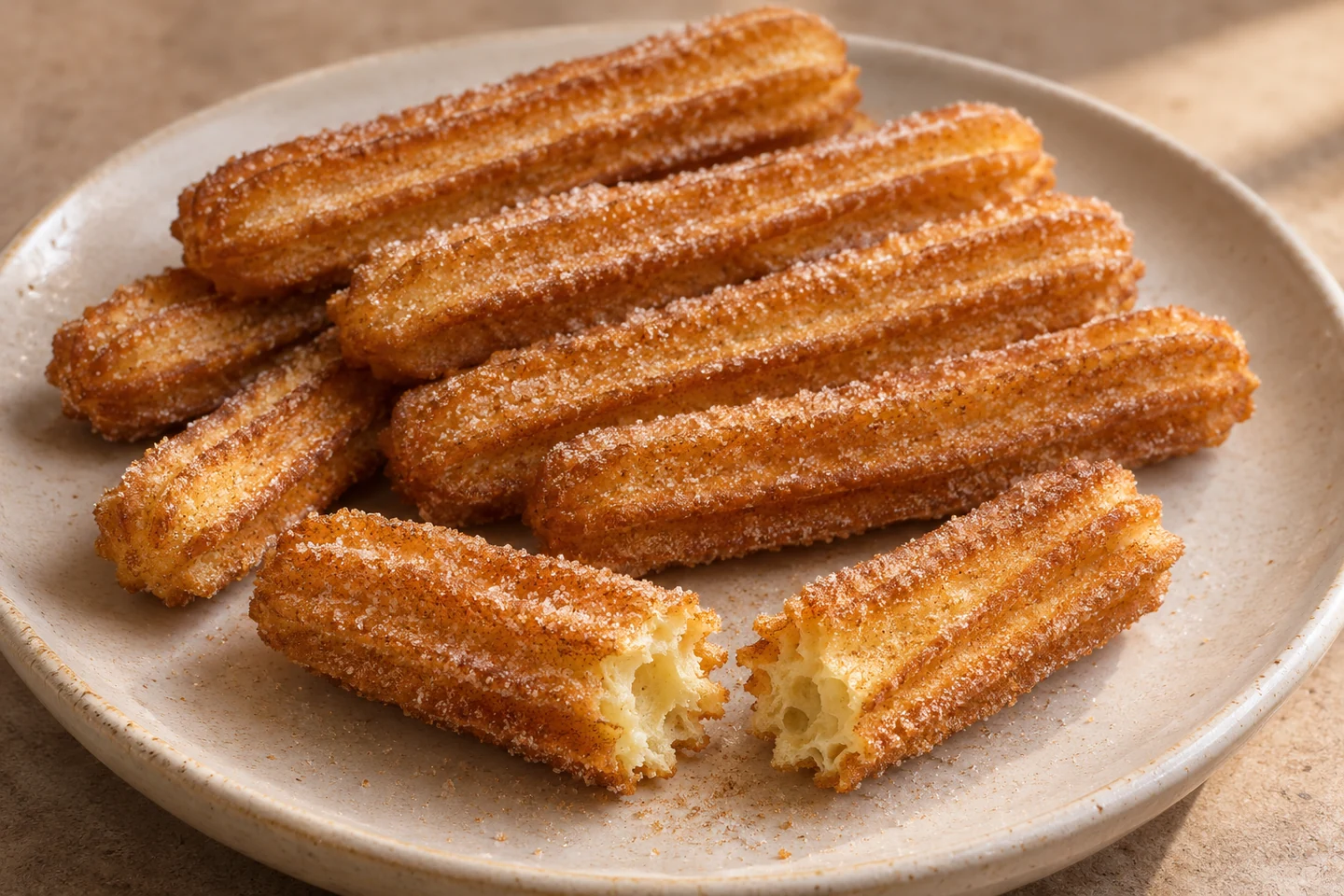
Serve warm, ridged churros with a crisp golden shell and a tender center. This egg-enriched dough and small-load frying workflow suit a café dessert counter, food stall or restaurant preparing churros to order.
Cinnamon-sugar churros with crisp ridges and a tender center. AI illustration.
Batch recipe and target yield
Plan for approximately 60 churros at a trial dough weight of 32 g each. The dough ingredients total 2,080 g before cooking. Evaporation and dough left on tools change the usable weight. Weigh the finished dough and divide the portion you can pipe by 32 to record the actual count. A usable 1,920 g gives 60 pieces, or 20 three-piece portions. The pilot pieces are part of the batch.
| Component | Ingredient | Weight |
|---|---|---|
| Dough | Water | 680 g |
| Unsalted butter, cubed | 340 g | |
| All-purpose flour | 450 g | |
| Pasteurized liquid whole egg, unsweetened | 600 g | |
| Fine salt | 10 g | |
| Total before cooking | 2,080 g | |
| Coating | Granulated sugar | 240 g |
| Ground cinnamon | 12 g | |
| Total coating prepared | 252 g |
Frying oil: Use a refined neutral oil suitable for deep frying. Fill the cold fryer according to its marked working oil level and supplied instructions. Weigh the oil added and enter that amount in the prep sheet. The listed tank capacity and the marked working fill serve different purposes.
Set out a saucepan and suitable hob, sturdy spoon, mixing bowl, heavy-duty piping bag with a secure open-star tip, scale, dry scissors, fryer thermometer, fine-tip food probe, skimmer, draining rack and a shallow coating tray. Start with a star opening around 12 mm. Confirm a strip near 15 cm long can float freely in your actual basket before heating the oil. Contains wheat, milk and egg.
Choose the fryer for your service
The GRACE GR-101 single-tank electric fryer provides a 10L listed tank and 3 kW heating in a countertop format. It is a practical choice for a dedicated sweet-frying station. Keeping dessert oil dedicated also helps preserve flavor.
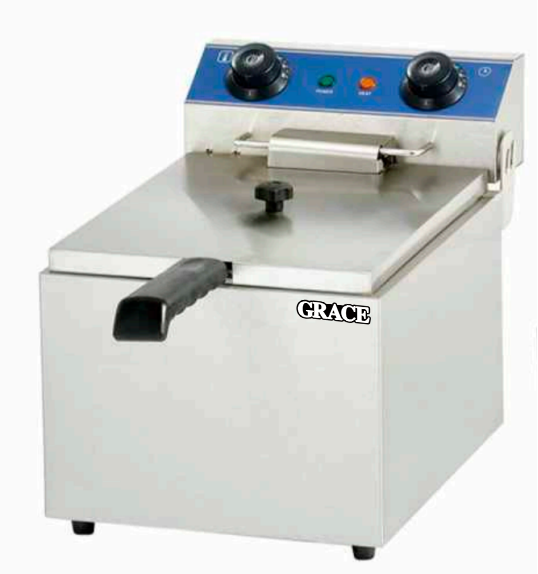
| Specification | GR-101 |
|---|---|
| Configuration | Countertop, single tank |
| Listed tank capacity | 10L |
| Matched electrical specification | 220 V, 3 kW |
| Overall dimensions | 290 × 440 × 290 mm |
View GR-101 specifications and the GRACE electric fryer range
For a small test menu, the GR-061 offers a 6L tank and 2 kW heating in a 190 × 440 × 275 mm body. For a station that needs two frying zones, the GR-102 provides two 10L tanks, each rated at 3 kW, in a 590 × 440 × 290 mm body. Confirm the installation circuit and the exact unit’s voltage, phase and frequency against its nameplate. Trial the basket fit and recovery of each model before setting its portion count per load.
Prepare the dough
- Cook the flour base. Heat the water, butter and salt in the saucepan. Once the butter is melted and the liquid boils, take the pan off the heat and stir in all the flour. Return to moderate heat and stir until the dough forms a cohesive mass and pulls from the pan. Transfer to the mixing bowl.
- Add the egg gradually. Stir to release steam, then let the base cool below 50°C (122°F). Work in the egg in several additions until the dough is smooth, thick and pipeable. This follows the cooked-dough method used in King Arthur Baking’s egg-enriched churros.
- Set the portion. Weigh the cooked dough. Pipe a ridged test strip onto a tared tray and weigh it. Adjust length and pressure toward 32 g, keeping its diameter and star profile consistent. Load the bag in small portions and press out large air pockets. Keep reserve dough covered and refrigerated, bringing out small working portions for frying.
Preheat, trial and fry in the GR-101
- Prepare the tank. Check that the cold tank and basket are clean and completely dry. Set the basket, element assembly and any guards in their operating positions following the supplied instructions. Add oil to the marked working level before switching on. Keep the lid off during frying.
- Verify the oil temperature. Start the trial near 180°C (356°F). Check actual oil temperature with a suitable independent fryer thermometer, clear of the heating element. Wait until the temperature stabilizes. Note the dial setting that achieves the measured target on your unit.
- Start with two churros. With the basket in its frying position, pipe close to the oil surface and snip each strip with dry scissors so it settles into the oil gently. Leave space for expansion. Use the handle and skimmer to manage the food while keeping hands clear of the oil.
- Turn and check. Turn the churros for even color. Make the first check around four minutes, then extend in short intervals. Look for an even golden surface and firm ridges. During the pilot, use a fine-tip probe in the thickest center, avoiding hot oil on the probe tip, and split a sample to check for wet dough. The USDA benchmark for dishes containing eggs is at least 71.1°C (160°F) internally. Continue cooking until the center is cooked and the texture is tender. Follow your kitchen’s approved cooking controls for the flour-and-egg dough. FDA guidance on raw flour and dough.
- Check recovery before loading again. Let the oil return to the measured target. If the pilot cooks evenly, test four pieces, approximately 128 g of dough, with room around each. Log the temperature after loading and the time to recover. Reduce the load if pieces crowd, stay greasy or color unevenly. Establish the station’s batch size from these observations.
- Drain, coat and serve. Lift the cooked churros onto a draining rack. Mix the cinnamon and sugar in a separate shallow tray, then roll the drained, warm churros in it. Shake off loose sugar and serve promptly. Use clean serving tools separate from the piping equipment.
Staff trial record: dough yield, star-tip opening, strip weight and length, oil fill, measured oil temperature, dial setting, load weight, cooking time, center check and recovery time. These are trial instructions for this recipe. Confirm the complete cycle on your installed GR-101 before training staff to a fixed timer.
Finish the shift and clean the fryer
Switch the fryer off and let the oil cool to the handling temperature stated in its instructions. Follow site procedures for power isolation and oil handling. Filter or change oil according to its condition and your kitchen’s procedure. Lift out crumbs with approved tools. Wash removable parts as directed, keeping the electrical controls and connectors dry. Remove cleaner residue and dry the tank and parts completely before refilling. Clean and sanitize dough-contact tools separately.
Common problems and adjustments
| What happens | Adjustment |
|---|---|
| Dark outside, wet center | Check actual oil temperature, strip diameter and weight. Trial a slightly lower oil temperature with a longer cook. Confirm the center again before serving. |
| Greasy or pale churros | Check recovery before reloading and reduce the load. Drain in a single layer with airflow around each piece. |
| Ridges flatten or dough spreads | Check ingredient weights and how thoroughly the flour base was cooked. Recheck the piping consistency after gradual egg mixing. Use a secure star tip and a consistent strip size. |
| Pieces stick together | Pipe fewer at once, leave gaps and separate gently after the surfaces have set. |
| Sugar slides off or becomes wet | Drain first and coat while warm. Refresh the coating tray when oil and moisture build up, and serve soon after coating. |