
How to Make Belgian-Style Buttermilk Waffles in a Commercial Waffle Maker
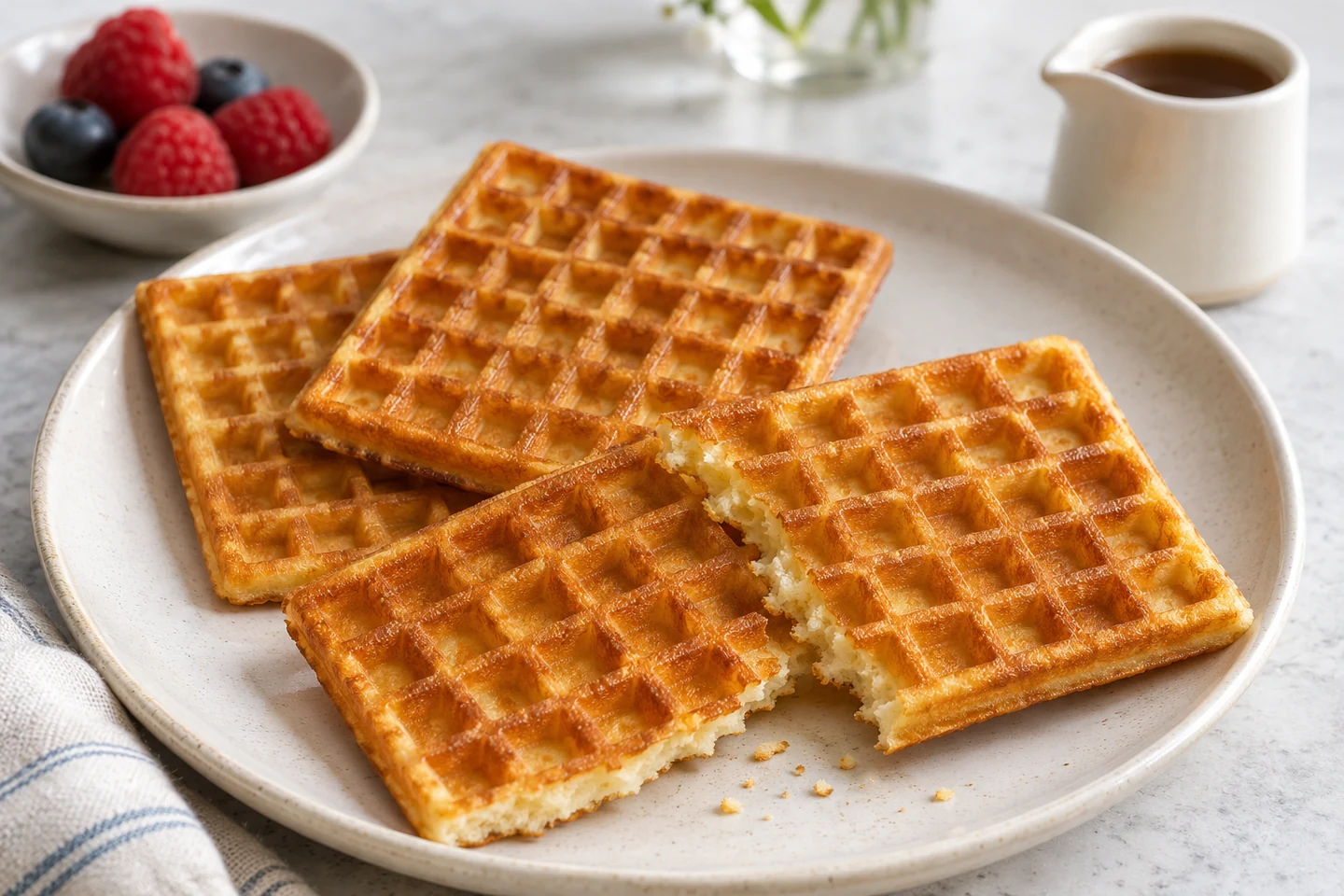
Use this batch recipe for a café or hotel breakfast station. Aim for evenly golden squares with crisp grid ridges and a tender, fully cooked center.
Golden buttermilk waffle squares. AI illustration.
Ingredients for 24 waffle squares
The batch makes 1,744 g of batter. Start the trial with 70 g per square, or 280 g for four squares per cycle. At that dose, six cycles use 1,680 g of batter and leave 64 g for bowl and ladle losses. The finished count changes if you adjust the dose to fit your plates.
| Ingredient | Batch weight |
|---|---|
| All-purpose flour | 590 g |
| Cornstarch | 40 g |
| Double-acting baking powder | 18 g |
| Baking soda | 5 g |
| Fine salt | 10 g |
| Granulated sugar | 50 g |
| Cultured buttermilk | 710 g |
| Pasteurized liquid whole egg, unsweetened | 200 g |
| Unsalted butter, melted and cooled slightly | 115 g |
| Vanilla extract | 6 g |
| Total batter | 1,744 g |
Set out a scale, portioning ladle, timer, heat-resistant nonmetal utensil and wire rack. If the plate instructions call for a release oil, have a small amount of neutral oil ready for brushing. The batter contains wheat, milk and egg.
Equipment for a café waffle station
The GRACE GR-2206-2A has four square sections under one lid. The format suits a station serving individual squares while cooking a few orders together. Check the unit’s nameplate and ask your installer to confirm the local supply before ordering.
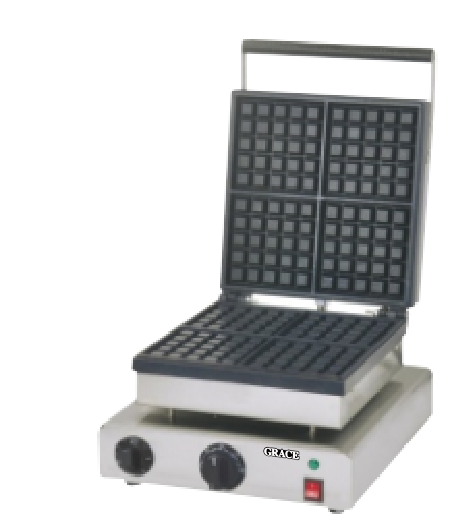
| Specification | GR-2206-2A |
|---|---|
| Cooking format | Four square sections on one plate set |
| Listed size per square | 135 × 135 mm |
| Listed electrical supply | 220 V, 2 kW |
| Overall dimensions | 445 × 345 × 240 mm |
| Listed temperature range | 0–300°C |
Mix, cook and serve
- Prepare and preheat the waffle maker. Make sure the plates are clean and dry. Switch on the unit, close the lid and start the trial at 180°C (356°F) on the dial. Wait for the preheat indicator to signal readiness as described in the unit instructions. Give the plates time to recover between cycles using the same readiness cue.
- Mix the batter near service. Whisk the flour, cornstarch, baking powder, baking soda, salt and sugar together. In another bowl whisk the buttermilk, pasteurized whole egg and vanilla, then stir in the melted butter. Pour the wet mix into the dry mix and stir until there are no dry patches. A few small lumps are fine. Keep reserve batter covered and cold under your kitchen’s food safety plan. Keep the raw ladle separate from the utensil used for cooked waffles. FDA guidance on handling raw flour and batter.
- Portion and close the lid. If the plate instructions call for oil, brush on a thin film. Tare and fill the ladle on the scale to find the mark for 70 g. Place one measured portion in the center of each section in a consistent order, then close the lid using the handle. Start the timer when the lid closes. Keep hands clear of escaping steam.
- Check the first cycle at about four minutes. Once steam slows, ease the lid up. If the waffle holds the lid, let it cook a little longer before checking again. A finished square releases cleanly and has a golden grid on both sides. Split a sample from each position during the first trial to check that the center is set all the way through with no wet batter. Treat the dial setting, fill weight and check time as trial settings. Confirm them over consecutive cycles under your kitchen’s cooking procedures.
- Serve crisp waffles. Lift with a nonmetal utensil and rest each square briefly on a wire rack before plating. Leave space between squares so steam can escape. Cook small batches as orders come in and add syrup and other wet toppings at service.
- Clean after the last order. Switch the machine off, disconnect it according to the unit instructions and let it cool. Lift crumbs with a soft brush, then wipe the grid and handles as directed by the manufacturer. Use approved tools and products for the coated surfaces. Keep water out of the controls and housing. Wash and sanitize the mixing and portioning tools separately.
Record fill weight, dial setting, time to release, browning by position and recovery time across several loads. Once the station has a repeatable cycle, use that measured cycle and its recovery time to plan the breakfast rush. The 24 squares describe the recipe yield at the trial dose.
Troubleshooting
| What you see | What to change on the next cycle |
|---|---|
| Batter spills at the edges | Reduce the dose by 5 g per square and recheck coverage once cooked. Update the batch yield when you settle on a new portion. |
| One corner stays thin | Make sure the machine is level and place each dose in the center. Increase the dose slightly only if the edges are still short and there is room for the batter to expand. |
| Dark outside, wet inside | Reduce the dial setting a little and extend the cook. Check a split sample before serving and record the changed settings. |
| The first batch is crisp, later ones are pale | Allow the plates to recover before reloading. If the color fades after plating, rest the squares on the rack and add toppings at the last moment. |