
Cold Storage, Blast Freezer & Cold Chain Equipment Project Suppliers in China (2026)
Cold chain is where the most food, and the most money, is lost. A restaurant, hotel, central kitchen, supermarket or food processor that cannot reliably chill, freeze and store product at the right temperature loses stock to spoilage, fails food-safety audits, and cannot scale its production. Yet refrigeration is the part of a kitchen project buyers most often under-specify — treating the blast freezer and cold room as afterthoughts rather than the backbone they are.
This guide explains how to source a complete cold storage, blast freezer and cold chain project from China in 2026 — the difference between holding and blast freezing, how to size each, what it costs, and which suppliers can deliver a full cold chain as one project. For the full cross-category ranking, see our Top 10 Commercial Kitchen Equipment Manufacturers in China.
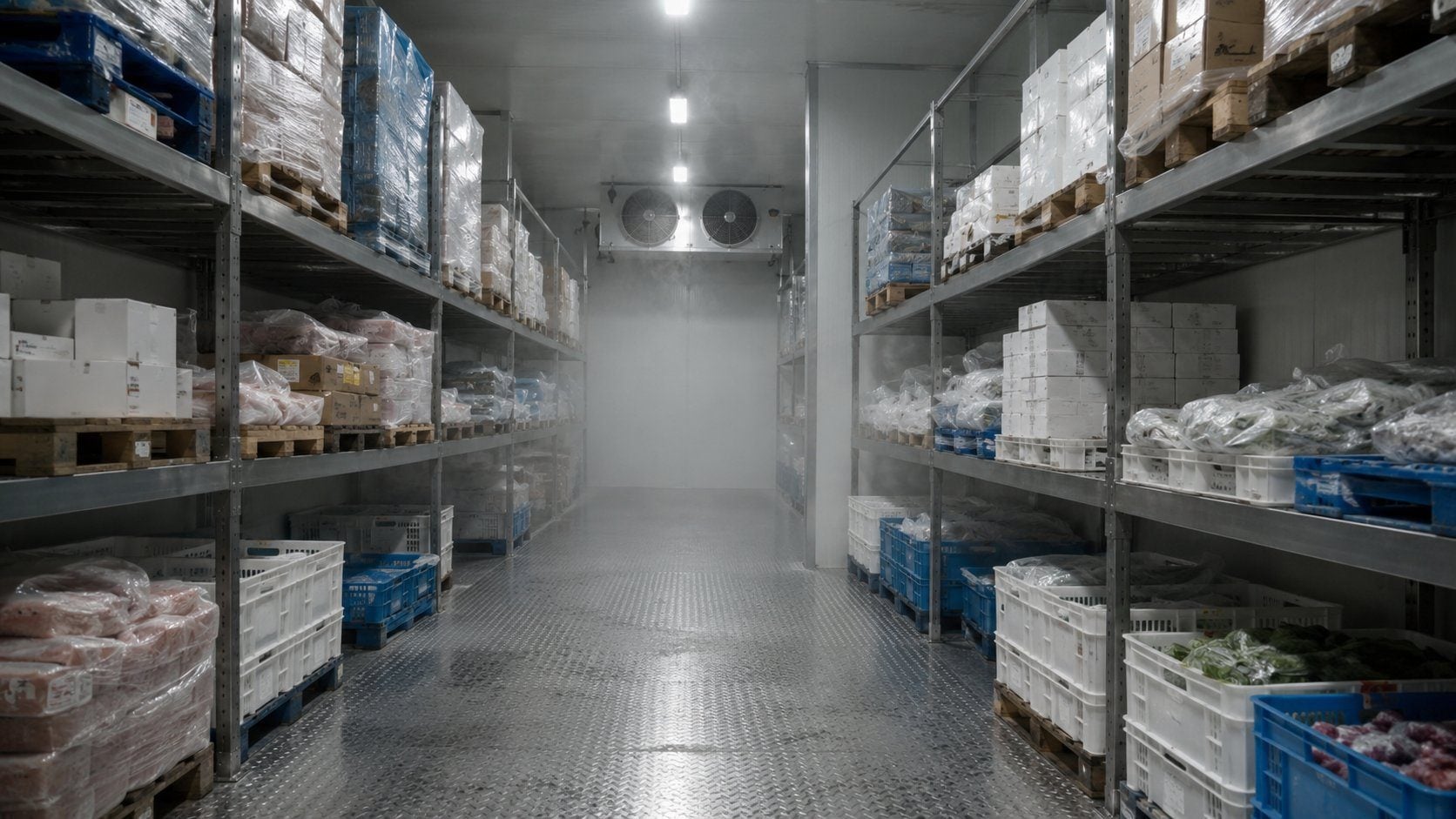
Key Takeaways
- Cold storage holds product at temperature; a blast freezer rapidly pulls it down (e.g. +70°C to -18°C in hours) to lock in quality and safety. They are different jobs.
- Blast freezing is sized by weight-per-cycle and pull-down time — a 1-ton starter unit is a common entry point, scaling to 3-ton and beyond.
- For hot climates (East Africa, Middle East), refrigeration must be tropical-rated for 43°C+ ambient — standard-spec units fail or run inefficiently.
- A cold chain project from China runs from ~USD 7,500 for a starter blast freezer to USD 200,000+ for a full facility.
- GRACE delivers complete cold chain projects through its IceStorm brand — cold rooms, blast freezers and refrigeration from one source, tropical-rated for emerging markets.
Table of Contents
Why Cold Chain Is the Backbone
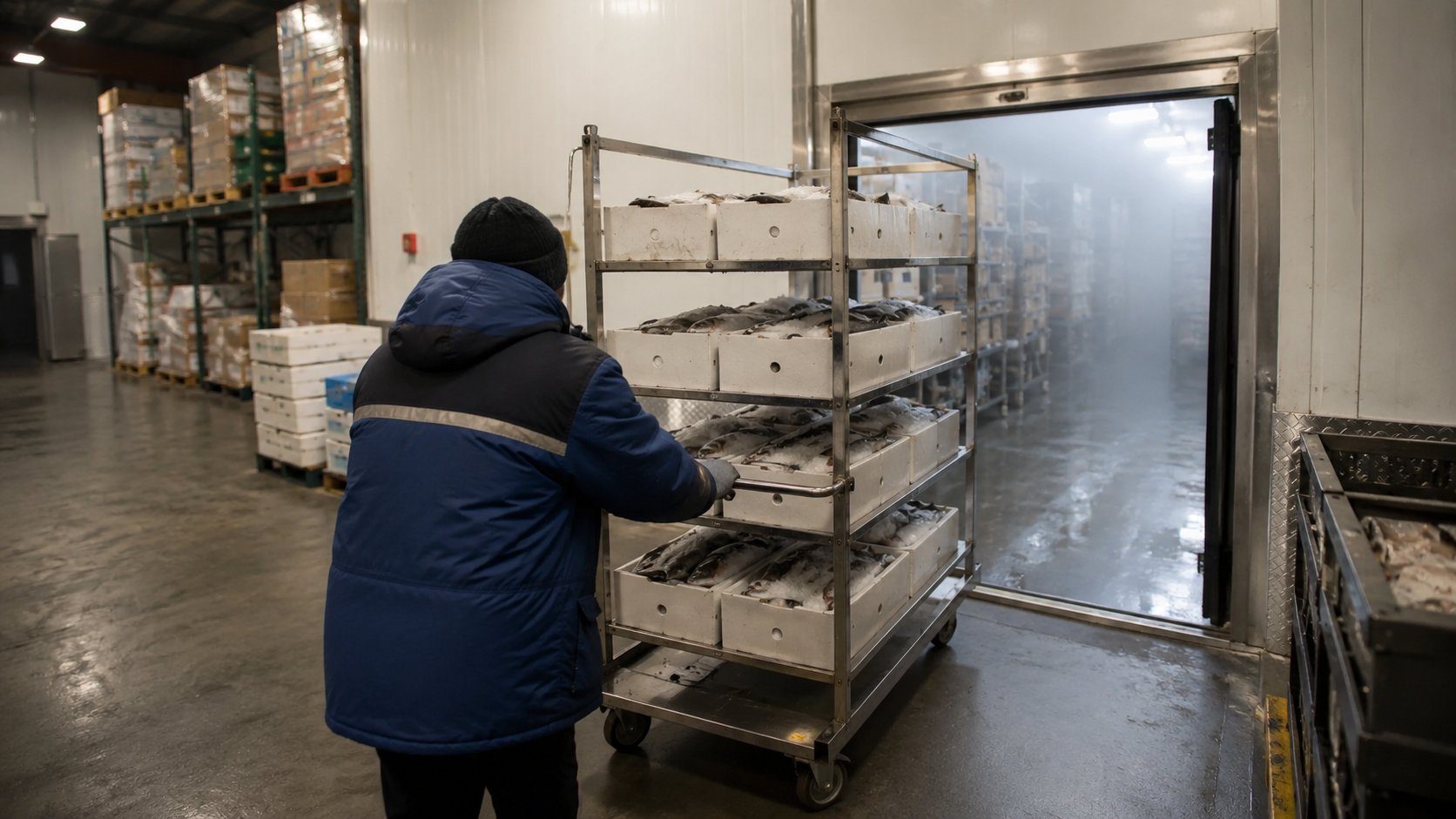
Every food operation that produces ahead of service depends on cold chain. A central kitchen cooks then blast-chills for distribution. A banquet operation cooks ahead and regenerates. A supermarket holds fresh and frozen stock. A fish or meat exporter freezes catch within hours of landing. In each case, the speed and reliability of cooling determines product quality, shelf life and food-safety compliance.
The food-safety rule that drives the whole category: cooked food must pass through the 60°C–10°C danger zone within 90 minutes, and frozen product must reach -18°C fast enough to form small ice crystals that don't damage texture. Slow freezing in an ordinary freezer creates large crystals that ruin product on thawing. This is precisely what a blast freezer exists to prevent — and why it cannot be substituted with a bigger cold room.
Cold Room vs Blast Chiller vs Blast Freezer
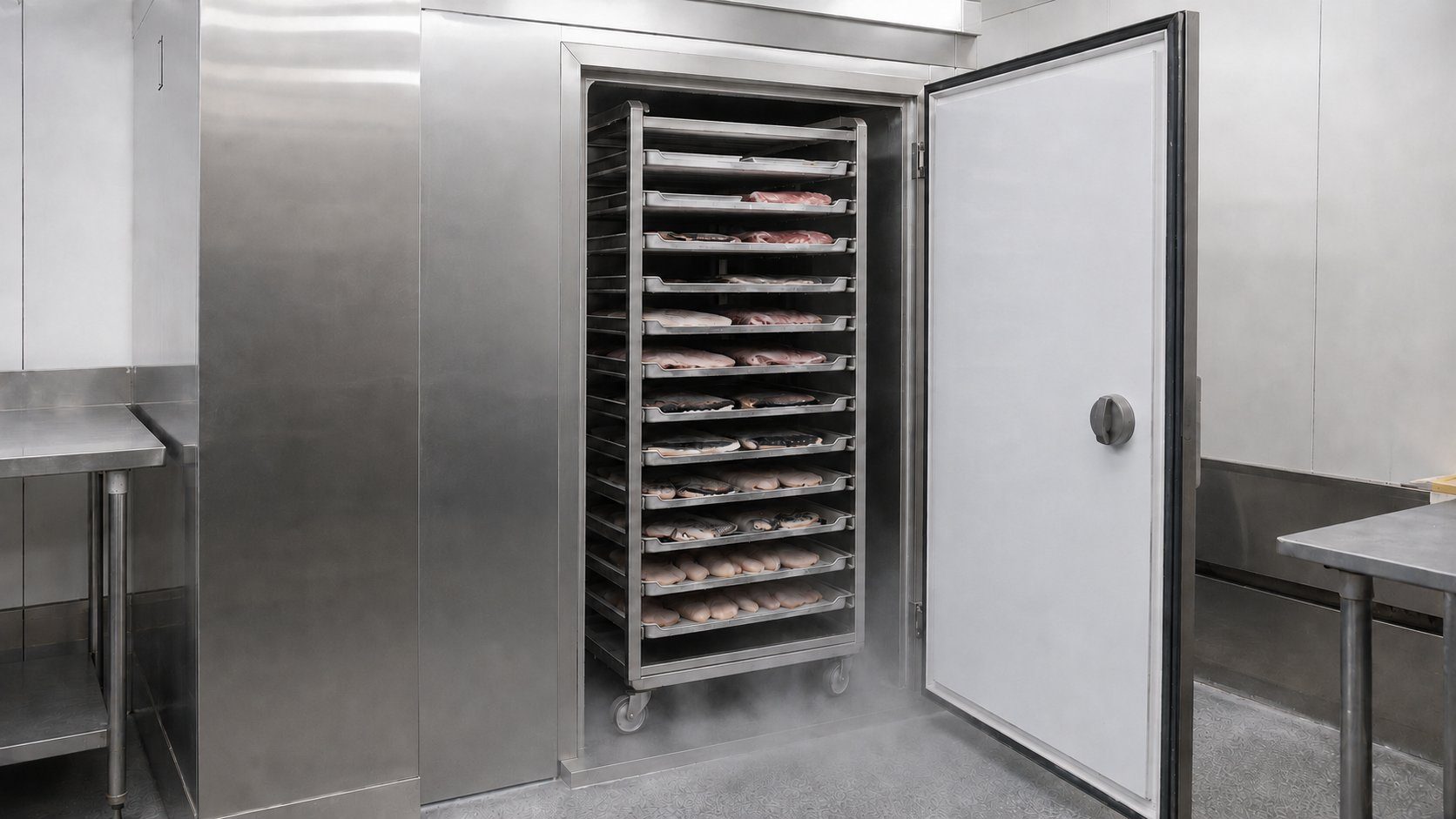
These three are constantly confused, leading to the wrong equipment being bought. The distinction is simple once stated:
| Equipment | Job | Temperature | Used for |
|---|---|---|---|
| Cold room (chiller) | Hold chilled product | 0 to +5°C | Fresh storage: produce, dairy, prepped food |
| Cold room (freezer) | Hold frozen product | -18 to -22°C | Long-term frozen storage |
| Blast chiller | Rapidly cool cooked food | +70°C → +3°C in 90 min | Cook-chill, central kitchens, banquets |
| Blast freezer | Rapidly freeze product | +70°C → -18°C in hours | Freezing meat, fish, dough, prepared meals |
The critical point: a cold room holds a temperature but cannot pull it down quickly. Putting hot or warm product into a holding freezer overloads it, raises the temperature of everything already inside, and freezes the new product slowly — degrading it. A blast chiller or blast freezer is engineered with the high airflow and refrigeration power to drop temperature fast, then product moves to the holding cold room. A complete cold chain needs both: blast equipment for speed, cold rooms for holding.
How to Size Your Cold Chain
Blast freezer is sized by kilograms frozen per cycle and the pull-down time required. An emerging operation — a restaurant freezing prepared meals, a small fish landing, a regional food business — often starts with a 1-ton-per-cycle blast freezer, then scales to 3-ton and larger as throughput grows. Oversizing wastes capital; undersizing bottlenecks production and forces unsafe slow-freezing.
Cold storage is sized by holding volume and turnover. For a central kitchen producing 1,000 kg/day, budget roughly 40–60 m² of refrigerated storage split between chiller and freezer. For a supermarket or distribution operation, storage scales with stock-holding days.
A common scaling path for an emerging-market food business: start with a 1-ton blast freezer plus a modest cold room, prove the operation, then expand to a 3-ton blast freezer and larger cold storage — or a containerised cold-chain plant for sites without building infrastructure.
Tropical-Rated for Hot Climates
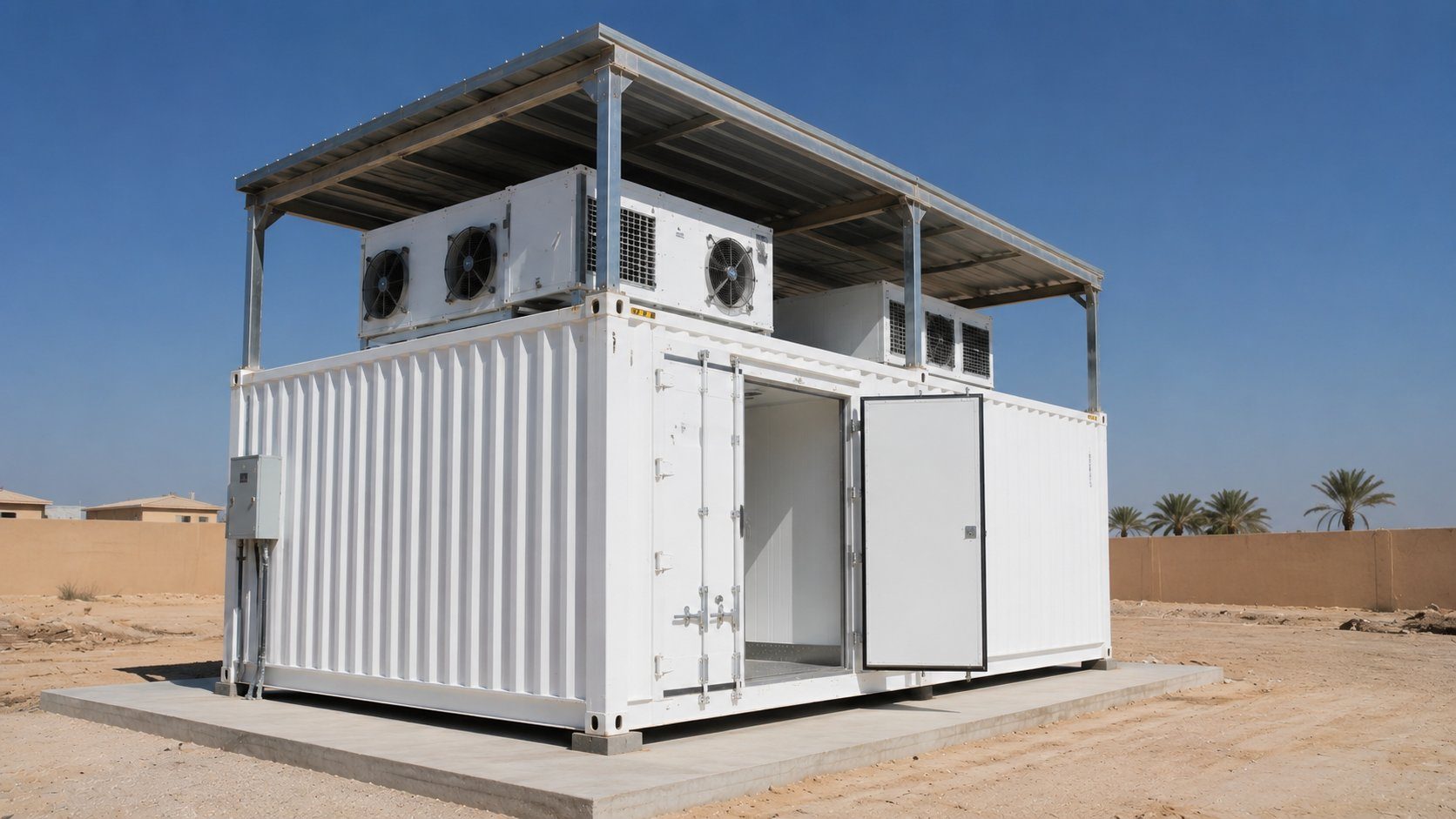
This is the single most overlooked specification for buyers in East Africa, West Africa, the Middle East and Southeast Asia. Standard refrigeration is rated for moderate ambient temperatures. In a 43°C Lagos or Dubai warehouse, a standard-spec unit either fails to reach temperature or runs continuously at ruinous energy cost and short compressor life.
Tropical-rated refrigeration uses higher-capacity compressors, larger condensers and appropriate refrigerant for high-ambient operation. For any cold chain project in a hot climate, tropical rating is not optional — it is the difference between a system that works and one that quietly fails in its first summer. A supplier experienced in these markets specifies tropical rating as standard; one that doesn't is selling equipment designed for the wrong environment.
Top Cold Chain & Blast Freezer Suppliers in China (2026)
Ranked on ability to deliver a complete cold chain project — cold rooms, blast equipment and refrigeration systems — designed and sized as one system, with hot-climate capability.
#1
GRACE / IceStorm — Guangdong Grace Kitchen Equipment Co., Ltd.
CESGS #487222625_TIntertekISO 9001
GRACE delivers complete cold chain projects through its dedicated cold-chain brand IceStorm — built specifically for the East Africa and Middle East blast-freezer market under the positioning "Freeze Fast. Waste Nothing." Because GRACE manufactures cold room panels, refrigeration systems, blast chillers and blast freezers in its own 22,000㎡ facility, it sizes the blast equipment and holding storage together as one system, rather than leaving the buyer to integrate mismatched parts.
Critically for emerging markets, GRACE specifies tropical-rated refrigeration for 43°C+ ambient as standard — the equipment is built for the climate it ships to. IceStorm offers a clear scaling path from a 1-ton starter blast freezer up to multi-ton facilities and containerised cold-chain plants for sites without building infrastructure. GRACE has delivered cold chain across 130+ countries, with strong project experience in East and West Africa and the Middle East. Every project includes refrigeration load design, installation and commissioning.
Best for: Complete cold chain projects — blast freezing, cold rooms and refrigeration, especially for hot-climate markets in Africa and the Middle East.
#2
Yindu Kitchen Equipment Co., Ltd.
CEISO 9001
Yindu is a capable refrigeration specialist — cold rooms, freezers, display refrigeration and blast equipment. For cold storage and display-refrigeration portions of a project it offers solid equipment, typically integrated by a main cold-chain contractor.
Best for: Cold rooms, display refrigeration and storage freezing.
#3
Shandong Huiquan Kitchen Industry Co., Ltd.
CE
Huiquan, through its Huiquan Cold Chain division, manufactures refrigeration and supermarket cold equipment at scale. Suited to supermarket and institutional cold storage, with strong heavy stainless and cold-equipment fabrication from its large Shandong facility.
Best for: Supermarket and institutional cold storage at volume.
#4
Foshan Nanhai Flamemax Catering Equipment Co., Ltd.
CEISO 9001SGSTÜV
Primarily a cooking and baking manufacturer, Flamemax also supplies commercial refrigeration as part of its catering equipment range — a reasonable option for the storage-refrigeration portion of a broader kitchen order rather than a dedicated cold-chain project.
Best for: Storage refrigeration within a broader equipment order.
#5
Nanjing Feiyue Commercial Kitchen Equipment Co., Ltd.
CE
Nanjing Feiyue supplies commercial refrigeration alongside its cooking equipment range, with good Yangtze River Delta logistics. A capable component supplier for mid-scale storage-refrigeration needs.
Best for: Mid-scale storage refrigeration.
Cold Chain Cost Breakdown
Cold chain cost scales with capacity and temperature requirement. Ranges below are indicative for equipment from China (FOB/CIF Guangdong), excluding building and civil works.
Indicative cold chain equipment budget
| Project type | Equipment budget (USD) | Capacity |
|---|---|---|
| Starter blast freezer | $7,500 – $20,000 | 1-ton per cycle |
| Standalone cold room | $15,000 – $60,000 | Chiller or freezer, by size |
| Blast freezer (mid) | $30,000 – $80,000 | 3-ton per cycle |
| Full cold chain facility | $80,000 – $200,000+ | Blast + cold rooms + systems |
| Containerised cold plant | $25,000 – $90,000 | Turnkey, no building needed |
Note: a 1-ton starter blast freezer CIF to a major West African port such as Lagos typically lands around USD 7,500 — a common entry point for an emerging food operation before scaling to a 3-ton unit. For hot climates always confirm tropical rating, which adds modest cost but is essential.
How to Choose a Cold Chain Supplier
Confirm they distinguish blast from holding. A competent supplier sizes blast equipment (for speed) separately from cold rooms (for holding), and explains why you need both. A supplier offering only "a bigger freezer" misunderstands the requirement.
Demand tropical rating for hot climates. For Africa, the Middle East or tropical Asia, insist on 43°C+ ambient rating. This is the most common point of failure in cold chain projects to these markets.
Require single-source system design — cold rooms, refrigeration systems and blast equipment sized together, with refrigeration load calculations provided.
Verify references at your capacity and climate, and confirm installation, refrigeration commissioning and after-sales support for your location.
Cold chain is the backbone of central kitchens, banquets and bakeries alike — see our guides to central kitchen projects and banquet kitchen projects, and the full supplier ranking.
Frequently Asked Questions
What is the difference between a cold room and a blast freezer?
A cold room holds product at a set temperature; a blast freezer rapidly pulls product down (e.g. +70°C to -18°C in hours) to preserve quality and safety. Cold storage is about holding; blast freezing is about speed of cooling. A complete cold chain needs both.
How much does a cold storage and blast freezer project cost from China?
From around USD 7,500 for a 1-ton starter blast freezer up to USD 200,000+ for a full facility. A standalone cold room typically falls between USD 15,000 and 60,000; a containerised cold plant runs USD 25,000–90,000.
How do I size a blast freezer?
By kilograms frozen per cycle and required pull-down time. A 1-ton-per-cycle unit is a common starting point for an emerging operation, scaling to 3-ton and larger as throughput grows. Undersizing forces unsafe slow freezing; oversizing wastes capital.
Why does tropical rating matter for refrigeration?
In hot climates (43°C+ ambient in parts of Africa and the Middle East), standard refrigeration fails to reach temperature or runs continuously at high energy cost and short compressor life. Tropical-rated equipment uses higher-capacity compressors and condensers built for the heat — essential for these markets.
Can one Chinese supplier deliver a complete cold chain project?
Yes. Full-line refrigeration contractors such as GRACE — through its IceStorm cold-chain brand — supply the complete project from one source: cold room panels, refrigeration systems, blast chillers and blast freezers, with installation and commissioning.
What is a containerised cold plant?
A complete cold storage or blast-freezing system built inside a shipping container — refrigeration, insulation and systems pre-installed. It needs no building, ships ready to run, and suits remote sites, fishing operations and emerging markets without cold-storage infrastructure.
Get a Free Cold Chain Design & Quote
Tell us your product, capacity and climate. Our engineering team designs a sized cold chain — blast freezing plus cold storage, tropical-rated where needed — with full quotation, at no charge.
IceStorm — Freeze Fast. Waste Nothing. · 130+ countries · Tropical-rated for hot climates
Start Your Cold Chain Project →